Crane Slewing Ring for Reliable Crane Rotation
Cranes must use a slewing ring, as it has to withstand the axial load generated by hoisting heavy loads, the radial load caused by wind loads, and the overturning moment created by the boom and counterweight—a moment that is likely to cause the slewing bearing raceway to collapse. Furthermore, as cranes operate under conditions of continuous rotation, the rolling elements are subjected to alternating contact stresses over extended periods, making wear and fatigue inevitable. In such circumstances, reliability is a matter of life and death: should the raceway spall or seize, the consequences range from a loss of rotation in mild cases to the overturning of the entire machine in severe cases. A reliable slewing ring ensures the stable transmission of loads during high-frequency rotation, prevents sudden failure, and safeguards lives and property on the construction site—this is the aspect of crane design on which there can be absolutely no compromise.
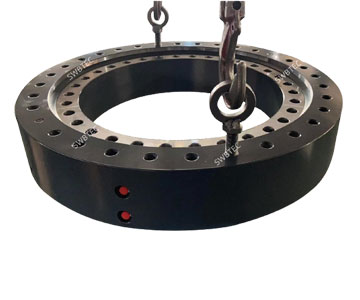
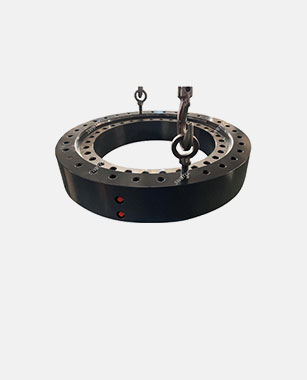
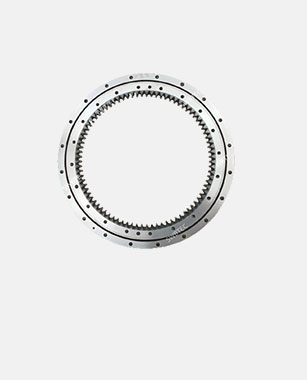
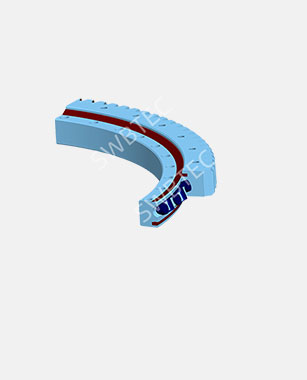
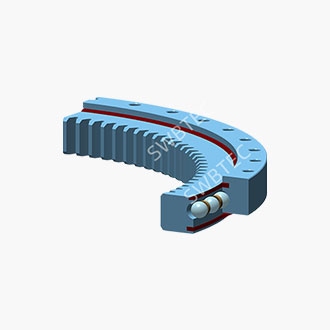
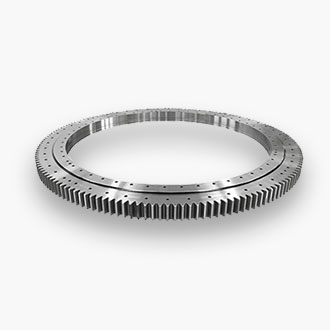
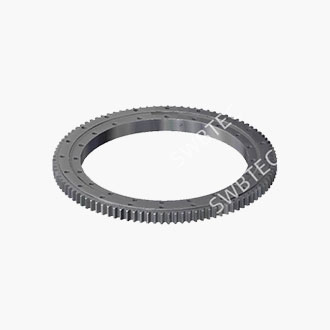
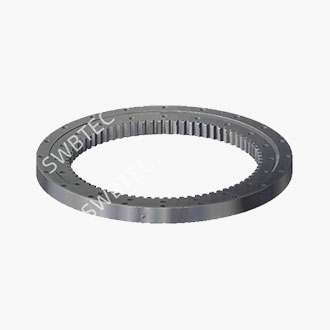
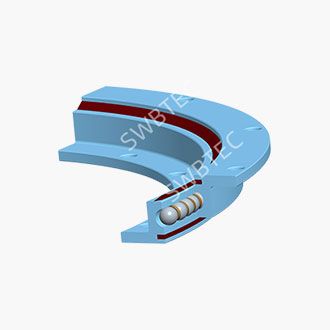
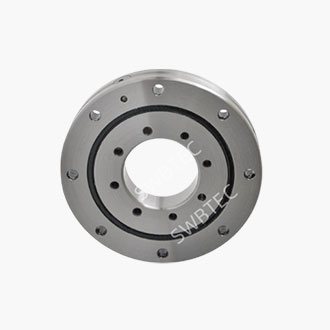
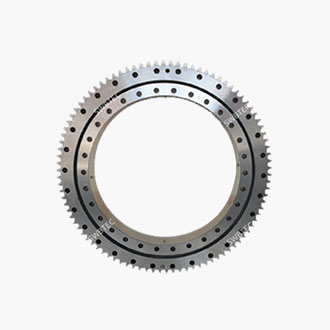
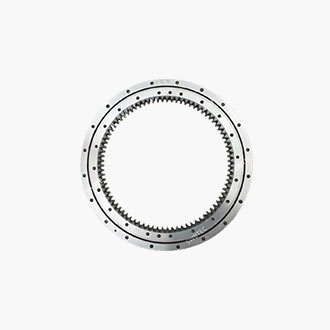
The core of customized crane slewing ring begins with the drawing; the customer must specify the mounting interfaces, external dimensions and gear parameters. The gear type is typically involute or straight-toothed; depending on the drive position, either internal or external gearing may be selected to accommodate different gearbox layouts. The mounting holes, evenly distributed around the bearing ring, must match the host machine's bolt holes precisely to ensure connection rigidity. The raceway design is optimised according to load requirements, employing a double-row or triple-row roller structure to simultaneously withstand axial forces, radial forces and overturning moments. To cope with harsh operating conditions, the lubrication system is periodically filled with extreme-pressure lithium-based grease via grease nipples or a centralised lubrication system. This is complemented by seals (such as double-lip fluororubber seals) to prevent the ingress of dust and rainwater, thereby extending service life. The material selected is high-strength alloy steel (such as 42CrMo), which undergoes heat treatment—including quenching and tempering, medium-frequency quenching and tempering—to achieve high surface hardness and core toughness, ensuring the raceways are wear-resistant and fatigue-resistant. Every customised detail must be repeatedly verified to ensure that the final bearing assembly maintains long-term stability during heavy-duty operation in all weather conditions.
Tower Crane Slewing Bearing Specifications
| Item | Description |
| Bearing Type | Four-point contact ball / roller |
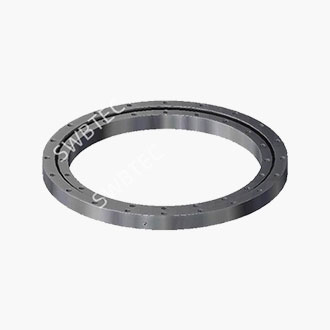
| Gear Type | Internal / External / Gearless |
| Material | 50Mn / 42CrMo |
| Raceway | Customized |
| Gear Module | Customized |
| Mounting Holes | According to drawing |
| Sealing | Customized |
| Lubrication | Grease lubrication |
| Application | Tower crane |
How to Choose the Right Tower Crane Slewing Ring
Selecting the correct slewing ring for a tower crane requires a systematic assessment of several key parameters. Firstly, the maximum axial load and radial load must be calculated based on the maximum lifting capacity and boom reach; safety factors for static and dynamic loads must be verified for each respectively. At the same time, the overturning moment must not be overlooked—this is the most dangerous composite load, and a double-row or triple-row roller structure should be selected to enhance resistance to overturning. Secondly, the rotation speed determines the frequency of contact stress on the rolling elements; large rollers may be selected for low-speed, heavy-load applications, whilst lubrication and heat dissipation must be considered for medium-speed operation. Gear requirements—including module, number of teeth, accuracy grade and internal/external gear configuration—must be matched to the meshing parameters of the drive pinion. Installation dimensions must precisely match the bolt hole pattern and locating shoulders of the tower flange to ensure reliable axial positioning. Operating conditions, such as temperature, humidity, dust or salt spray, directly influence the design of seals and corrosion protection; high-temperature environments require heat-resistant grease, whilst dusty conditions necessitate reinforced lip seals. Finally, lubrication requirements should specify the grease grade, replenishment intervals and method of application to the gear surfaces, ensuring that the raceways and gear surfaces are always maintained in a good oil film condition. Taking all the above factors into account, it is recommended that a joint verification be carried out with the manufacturer in order to select a safe, durable and cost-effective crane slewing bearing.
Frequently Asked Questions about Tower Crane Slewing Rings
Q1: What is a tower crane slewing ring?
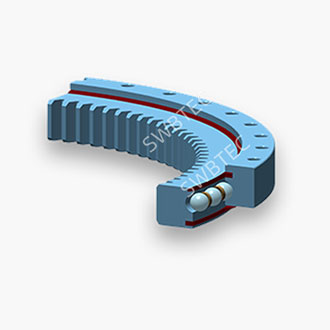
The tower crane slewing ring is a key component that connects the upper and lower rotating sections of a tower crane. It consists of an inner ring, an outer ring, rolling elements, separators, seals and teeth (optional). Its core function is to enable continuous rotation of the upper section, allowing the jib to rotate flexibly through 360°, whilst withstanding enormous axial loads (from hoisted loads), radial loads (from wind loads and inertial forces) and, most critically, overturning moments (generated by the couple between the jib and the counter-jib). It serves both as a load-bearing component and a transmission component (engaging with the drive pinion via internal or external teeth), and its reliability directly determines the safety and efficiency of tower crane operations.
Q2: How do I choose a slewing ring for a tower crane?
Correct selection requires a systematic assessment of the following key parameters:
Maximum axial load and radial load: Calculate the static and dynamic load safety factors based on the maximum lifting capacity, jib reach and wind loads.
Overturning moment: This is the primary basis for selection; a structure with sufficient rigidity and an appropriate number of rolling element rows (e.g. double or triple rows of rollers) must be chosen to counteract the tendency to tip over.
Rotation speed: This affects the contact stress on the rolling elements and the dissipation of heat generated by lubrication; large rollers should be selected for low-speed, heavy-load applications, whilst enhanced lubrication is required for medium speeds.
Gear requirements: Specify the module, number of teeth, accuracy class and whether internal or external teeth are required to ensure correct meshing with the drive pinion.
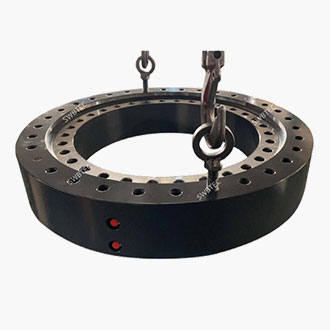
Installation dimensions: These must precisely match the bolt hole pattern, hole diameters and locating shoulders of the tower flange.
Operating environment: High-temperature, high-humidity, dusty or salt-fog environments determine the sealing grade, anti-corrosion coating and temperature range of the grease.
Lubrication requirements: Determine the grease grade, replenishment intervals and method of lubricating the gear surfaces.
Taking all of the above into account, it is recommended that a finite element analysis be carried out in collaboration with the manufacturer to ensure a balance between safety and cost-effectiveness.
Q3: Can you manufacture a customised crane slewing ring?
Certainly. Reputable manufacturers generally offer customisation services. As tower crane models, drive configurations and mounting interfaces vary greatly, standard products are often unable to meet specific requirements. Customised slewing rings can be designed to non-standard specifications based on the operating conditions and interface data provided by the user. This includes adjusting the inner and outer ring diameters, the diameter and quantity of rolling elements, gear parameters, and the position and number of mounting holes, whilst utilising suitable materials and heat treatment processes to ensure a perfect fit with the host machine and long-term reliable operation.
Q4: What information is required for a customised slewing ring?
Drawings: Host machine interface drawings or installation space layout diagrams.
Dimensions: Key external dimensions such as outer diameter, inner diameter, height and mounting hole spacing.
Gear type: Involute or straight teeth, as well as module, number of teeth and pressure angle.
Internal/external gear: Specify the position of the gear ring.
Mounting holes: Hole diameter, number of holes, centre circle diameter and requirements for hole position tolerances.
Raceway design: Single-row, double-row or triple-row raceways, contact angle, raceway hardness, etc.
Load requirements: Specific axial, radial and overturning moment values (including safety factors).
Lubrication: Lubrication method (grease nipple/centralised lubrication) and grease requirements.
Sealing: Sealing type (e.g. double-lip fluororubber) and protection rating (dustproof/waterproof).
Material: High-strength alloy steel (e.g. 42CrMo) is preferred.
Heat treatment: Process requirements such as quenching and tempering, medium-frequency quenching and tempering, etc., as well as surface hardness and depth of hardening.
Send us your drawing or existing slewing bearing dimensions for evaluation.
Slewing Ring Applications for Large Cranes
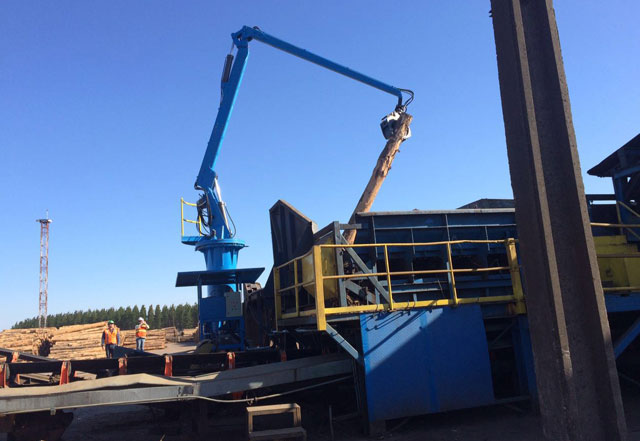
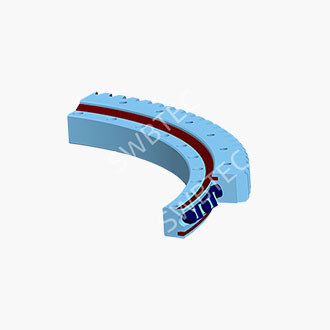
Before, slewing ring for crane, especially for big crane, the structure is 3-row roller slewing rings with inner gear or outer gear, now after cost efficient solutions, the structure has been changed to double row ball slewing bearing or single row with special raceway, this has help customer reduced some purchasing cost with keeping the same load.
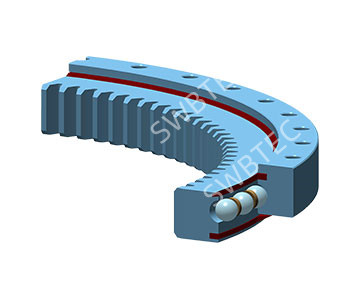
Most tower crane slewing rings are designed according to the specific structure and operating conditions of the crane. SWBTEC can provide customized slewing bearings based on customer drawings, samples or technical requirements.
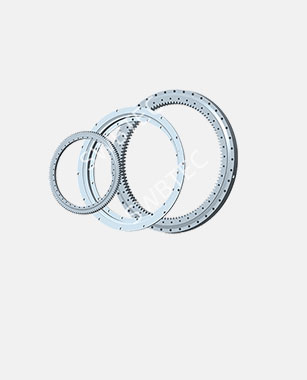
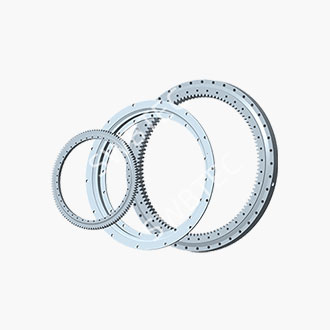
Customization can include bearing dimensions, gear configuration, mounting holes, raceway design, material, heat treatment, sealing and lubrication requirements. Internal gear, external gear and gearless configurations can be considered according to the crane design.
For OEM replacement or new equipment projects, customers can provide a drawing, existing bearing dimensions or other technical information for evaluation.
Slewing Bearings for Different Crane Applications
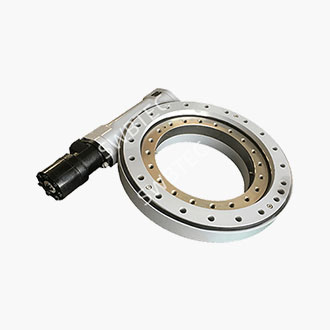
We also can produce slewing ring bearing such as the flange slewing bearing for after-market parts of crane, including Kobelco, Hitachi, Tadano, KATO, XCMG. The original slewing ring for crane is with gear no hardening treatment, while we do all gear hardening treatment, this can help make the service life of the bearing much longer than the original.


 English
  日本語
日本語  français
  Deutsch
  Español
  italiano
  русский
  português
  العربية
  Türkçe
  Polska
  Nederland