English
  日本語
日本語  français
  Deutsch
  Español
  italiano
  русский
  português
  العربية
  Türkçe
  Polska
  Nederland
Jan 06 2024
Double Row Slewing Bearing: Enhancing Efficiency and Safety in Engineering and Construction Industries
Read More >

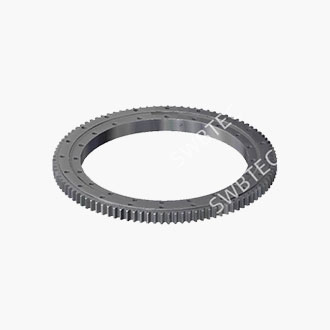
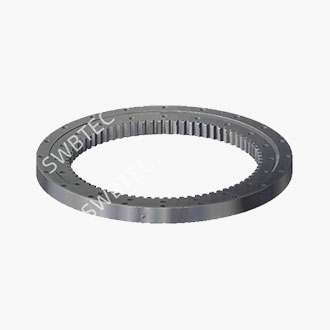
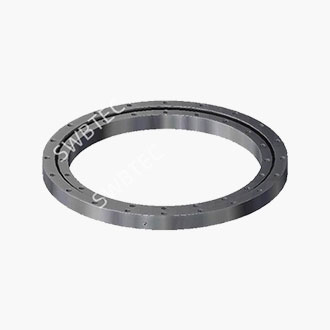
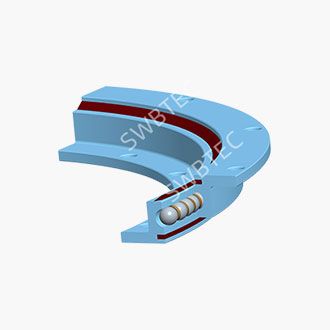
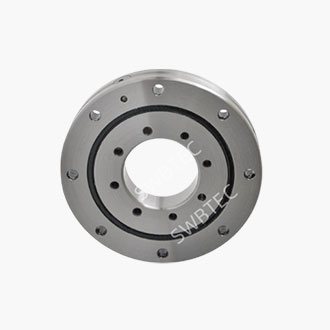
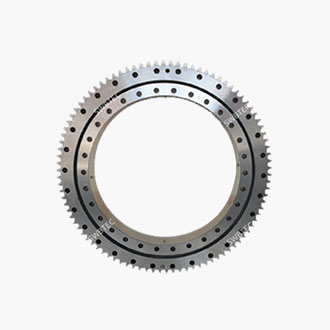
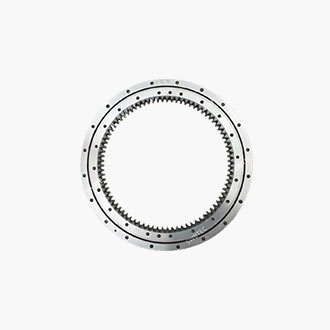
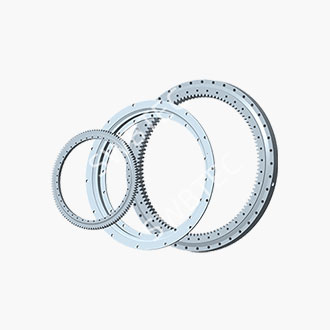
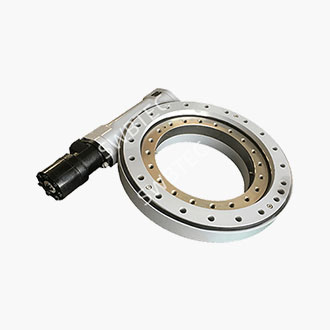
Wear Resistance of Slewing rings Gears Is Critical: Should You Choose Single-Tooth Induction Hardening or Full-Tooth Hardening ?
I. Why Is the Wear Resistance of Ring Bearings Gears So Critical?
During operation, slewing rings are subjected to the combined effects of axial forces, radial forces, and overturning moments. As the core component responsible for transmitting rotational torque, the quality of the gears' heat treatment directly determines the service life and transmission smoothness of the entire slewing bearing assembly.
Under actual operating conditions, one of the primary forms of gear failure is wear and tooth breakage. Gear surface wear leads to increased meshing clearance and reduced transmission accuracy; in severe cases, it can even cause the entire machine to fail. Tooth breakage, on the other hand, is often catastrophic, directly resulting in equipment shutdown. Although these two failure modes appear different, they both stem from the same root cause—an improper balance between the gear’s surface hardness and core toughness.
Insufficient surface hardness naturally results in inadequate wear resistance; conversely, excessively high surface hardness combined with insufficient core toughness makes the gear teeth prone to cracking or even tooth breakage under impact loads. Therefore, how to make gears both hard and tough through a reasonable quenching process is a core technical challenge that every slewing bearing manufacturer must address.
Currently, the most widely used method for gear surface hardening in the industry is induction hardening. Depending on the application and gear parameters, induction hardening is divided into two main approaches: full-tooth hardening and single-tooth induction hardening. This raises the question: How should one choose between these two approaches?
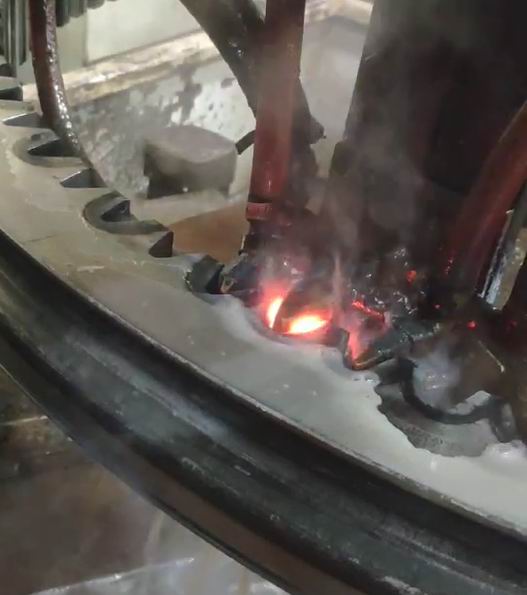
II. What Is the Difference Between Full-Tooth Hardening and Single-Tooth Induction Hardening?
2.1 Full-Tooth Induction Hardening: Treating All Teeth in a Single Pass
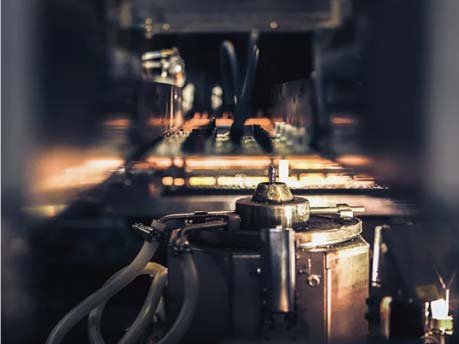
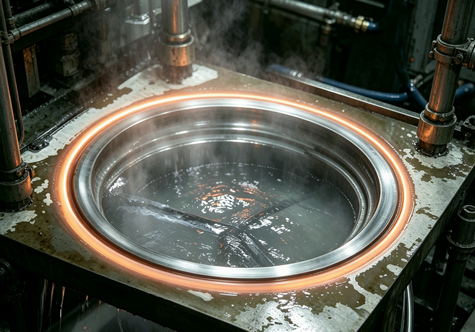
As the name suggests, full-tooth induction hardening involves heating and cooling all the teeth of a gear simultaneously, completing the hardening treatment of the entire gear ring in a single pass. This process uses a contouring inductor to form a "W"-shaped hardened layer extending from the tooth tip to the root.
The advantage of full-tooth induction hardening is clear—high efficiency. The entire hardening process typically takes only a few minutes to complete. For gears with small to medium module sizes, full-tooth induction hardening ensures uniform hardness across the upper, middle, and lower sections of the tooth surface.
However, the barriers to entry for full-tooth induction hardening are significant. The equipment investment is substantial, and the power requirements are high; full-tooth induction hardening requires a high-power power supply in the 750 kW range. Equipment investments often run into the millions of yuan, which not every manufacturer can afford.
2.2 Single-Tooth Induction Hardening: One at a Time, with Higher Precision
Single-tooth induction hardening involves heating and cooling each tooth individually, treating each tooth separately. Depending on the hardening range, single-tooth induction hardening can be further subdivided into two types: tooth-face and tooth-root hardening, and tooth-face hardening.
The advantages of single-tooth induction hardening lie in its high precision and flexibility. It allows for precise control over the depth and distribution of the hardened layer on each tooth, making it particularly suitable for the hardening requirements of large-module gears. Single-tooth induction hardening requires relatively lower equipment power, and the investment threshold is significantly lower than that of full-tooth induction hardening.
However, the drawback of single-tooth induction hardening is also evident—low efficiency. Processing each tooth individually results in longer processing times, and production efficiency is far inferior to that of full-tooth quenching. Furthermore, for gears with smaller module sizes, it is difficult to form an effective hardened layer at the tooth root after single-tooth quenching.
III. Single-Tooth or Full-Tooth? The Key Lies in These Three Dimensions
3.1 Module: The Most Intuitive Basis for Decision-Making
We believe that module is the primary reference indicator for selecting a quenching process. Generally speaking, gears with a module greater than 6 are recommended for single-tooth quenching, while gears with a module less than 6 are better suited for full-tooth quenching.
The reason is actually quite straightforward: the root areas of small-module gears are sharper and thinner. During single-tooth quenching, heat tends to concentrate at the tooth tip, making it difficult for the root area to reach a sufficient quenching temperature, and thus hindering the formation of a hardened layer. In contrast, full-tooth quenching, through uniform heating of the entire gear, allows heat to be distributed evenly, ensuring that the tooth roots are also fully hardened.
For gears with a module around 6, both processes can be considered; in such cases, a comprehensive assessment must be made by taking other factors into account.
3.2 Material: Different Materials, Different Approaches
Material is also a key factor influencing process selection. Take the common steels used for slewing bearings, 42CrMo and 50Mn, as examples—42CrMo has good hardenability, and full-tooth quenching can fully meet the technical requirements; whereas 50Mn has relatively poor hardenability, making full-tooth quenching considerably more difficult.
Furthermore, the prior heat treatment condition of the material must not be overlooked. Gears typically undergo normalizing or tempering before quenching, and the quality of the matrix microstructure directly affects the final quenching results.
3.3 Operating Conditions: Gear Hardening Based on Equipment Usage
The specific operating conditions under which the gear will ultimately function serve as the fundamental basis for selecting the hardening process.
If the equipment operates under heavy-load, low-speed, and high-impact conditions (such as excavators or mining machinery), the gears must withstand frequent impact loads; in such cases, the toughness of the core becomes even more critical than surface hardness. Single-tooth induction hardening allows for more precise control of the hardened layer depth, preserving a thicker core toughness zone, and is often the more prudent choice.
If the equipment operates under medium-to-light load, high-speed, and continuous-operation conditions, wear resistance is the primary consideration. Full-tooth hardening, with its uniform hardened layer, provides better wear resistance on the tooth surfaces and is also more efficient.
IV. Core Toughness, Tooth Surface Hardness, and Cost—How to Balance the Three?
This is the most vexing problem for slewing bearing manufacturers: high hardness risks brittleness, good toughness risks poor wear resistance, and trying to balance both risks spiraling costs.
4.1 "Hard on the Outside, Tough on the Inside" Is a Goal, Not Just a Slogan
The ideal gear condition is "hard on the surface, tough at the core"—the tooth surface is hard enough to resist wear, while the core is tough enough to withstand impact. The hardness of induction-hardened tooth surfaces is generally controlled between HRC 50 and 60, with an effective hardened layer depth of 2.2 to 3.5 mm on the tooth surface and 1.5 to 4.0 mm at the tooth root.
Since full-tooth quenching involves heating the entire gear, the hardened layer is distributed relatively uniformly along the tooth profile, forming a “W”-shaped pattern. Single-tooth quenching, on the other hand, allows for more flexible control, concentrating the hardened layer only on critical areas such as the tooth face and root while preserving a larger area of toughness in the core.
In terms of achieving the "hard on the outside, tough on the inside" profile with precision, single-tooth quenching has the edge—it ensures hardness where it is needed and toughness where it is required.
4.2 Cost: One-Time Investment vs. Long-Term Returns
In terms of equipment investment, the initial investment for full-tooth quenching is significantly higher than that for single-tooth quenching. High-power supplies, contour-following inductors, and specialized quenching machines—each represents a substantial expense.
In terms of per-unit processing cost, full-tooth quenching is highly efficient, takes less time, and results in a lower cost per unit; single-tooth quenching, which processes each tooth individually, takes longer and incurs a higher cost per unit.
However, when considering the total life-cycle cost, the picture changes—if improper selection of the hardening process leads to premature gear wear or tooth breakage, the combined costs of equipment downtime and repair or replacement may far exceed the initial savings made by choosing the cheaper hardening process.
4.3 SWBTEC's Practical Recommendations
As a slewing rings manufacturer in China, based on our many years of experience in manufacturing slewing bearings, SWBTEC recommends making decisions by following these steps:
Step 1: Define the gear parameters and operating conditions. What is the module? What is the diameter? Where will the equipment be used? Is the load nature impact-type or steady-state?
Step 2: Assess existing equipment conditions. What is the power capacity of the existing power supply? What is the frequency range? Is there a suitable quenching machine available?
Step 3: Calculate the total cost. Do not focus solely on the unit cost of the quenching process; factor in equipment depreciation, production efficiency, product yield, and service life.
Step 4: Conduct sample verification. No matter how sound the theory, it must be tested in practice. First, produce samples to test the hardened layer depth, hardness distribution, and microstructure; proceed to mass production only after confirming that they meet design requirements.
V. FAQ: Common Questions About the Quenching of Slewing rings Gears
Q1: What hardness level can Ring Bearings gears typically achieve after quenching?
A: The hardness of the gear surface after induction hardening is typically controlled between HRC 50 and 60. Specific values may vary depending on the material grade, hardening process, and application requirements. The hardness requirements for raceways are slightly higher, generally ranging from HRC 55 to 62.
Q2: What module is suitable for single-tooth hardening, and what module is suitable for full-tooth hardening?
A: The industry generally uses a module of 6 as the dividing line—gears with a module greater than 6 are recommended for individual tooth quenching, while those with a module less than 6 are suitable for full-tooth quenching. For gears with a module around 6, both processes can be considered; the decision should be based on a comprehensive assessment of the material, equipment, and operating conditions.
Q3: Which is more costly: individual tooth quenching or full-tooth quenching?
A: This question must be viewed from two perspectives. In terms of equipment investment, full-tooth quenching requires high-power power supplies and specialized equipment, resulting in initial costs far higher than those of single-tooth quenching. Regarding per-unit processing costs, full-tooth quenching is more efficient and takes less time, leading to lower per-unit costs; single-tooth quenching, which treats each tooth individually, results in higher per-unit costs. It is recommended to conduct a comprehensive evaluation from a total life-cycle cost perspective.
Q4: Will gears deform after quenching? How can this be controlled?
A: Due to the rapid heating and cooling rates of induction hardening, workpiece deformation is relatively minimal. However, some deformation may still occur after hardening, especially with full-tooth hardening. If high precision is required, a gear grinding process can be added after hardening to eliminate deformation and improve tooth profile accuracy.
Q5: Does the tooth root need to be hardened?
A: The tooth root is one of the areas where stress is most concentrated in a gear, and its fatigue strength directly affects the gear's bending fatigue life. Single-tooth induction hardening can be divided into two types: tooth root and tooth face hardening and tooth face hardening alone. The former covers the tooth root area and can effectively enhance tooth root strength. Whether or not to harden the tooth root depends on the operating conditions and load requirements.
Q6: What additional treatment is required for slewing bearing gears after hardening?
A: After hardening, tempering is typically required to relieve hardening stresses and stabilize the microstructure. For applications with high precision requirements, a gear grinding process is added after quenching and tempering to eliminate quenching distortion and improve tooth profile accuracy and surface finish.
There is no one-size-fits-all answer when selecting a quenching process for Turntable bearing gears—module, material, operating conditions, equipment, and cost are all factors that influence the final decision. SWBTEC has been deeply involved in the manufacturing of slewing bearings for many years and has accumulated mature technical expertise and extensive practical experience in both single-tooth induction hardening and full-tooth hardening. Regardless of your gear parameters or operating conditions, we can provide you with the most suitable hardening process solution.
Feel free to contact the SWBTEC team at any time, and let us tailor the optimal heat treatment solution for your Slewing Ring Bearings !