English
  日本語
日本語  français
  Deutsch
  Español
  italiano
  русский
  português
  العربية
  Türkçe
  Polska
  Nederland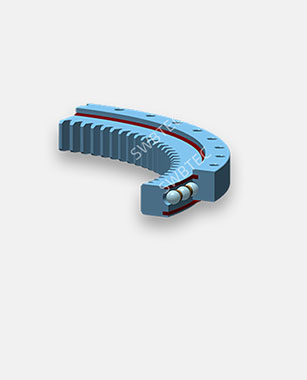
Jun 04 2025
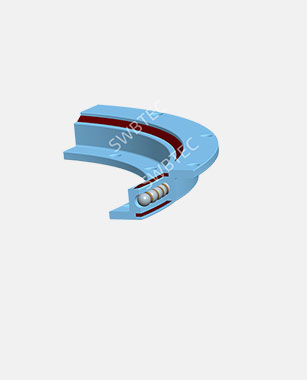
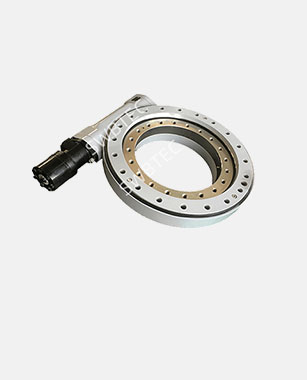
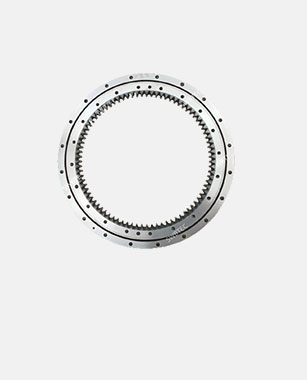
Double row slewing rings with same diameter ball and different diameter ball
Read More >

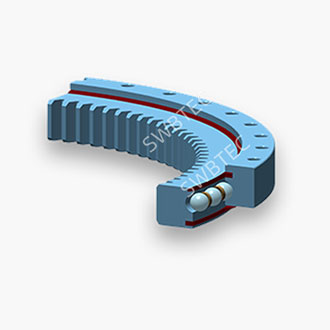
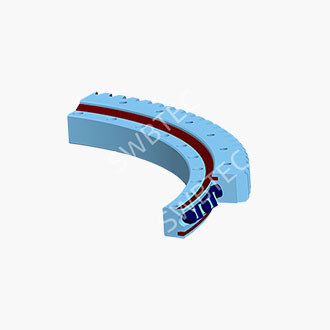
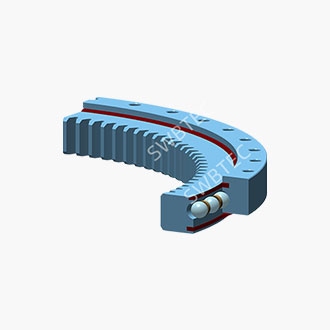
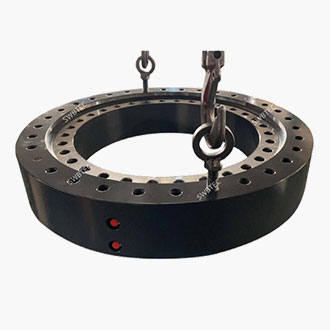
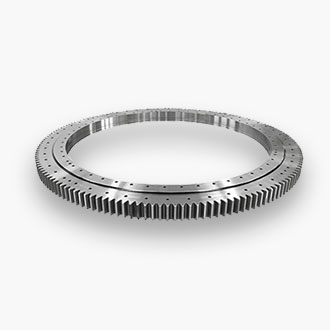
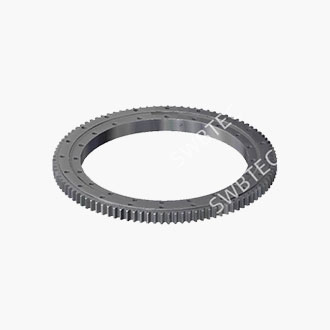
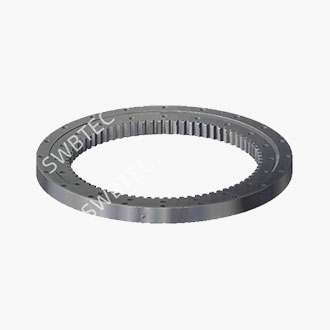
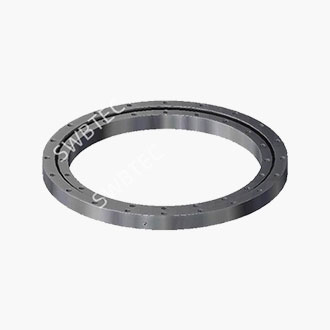
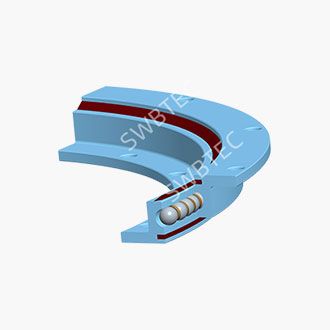
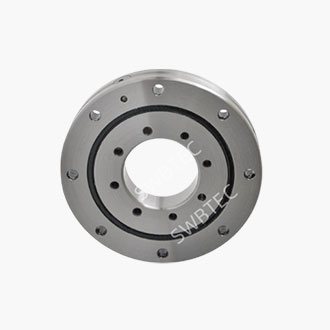
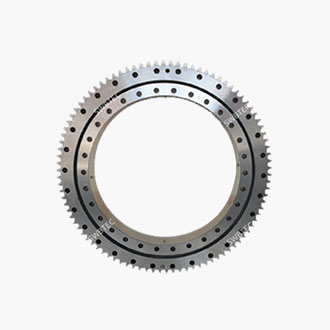
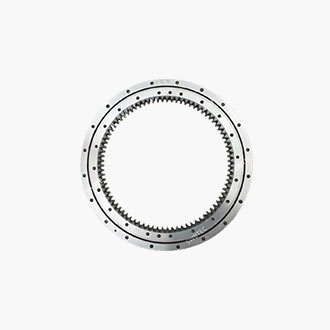
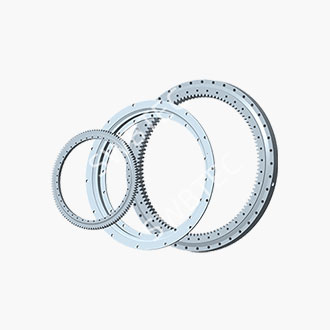
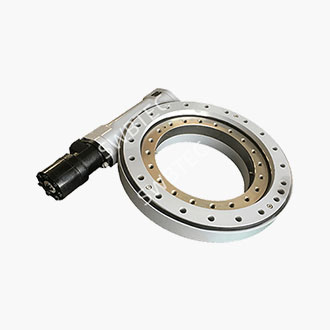
How SWBTEC Double-Row Ball Slewing Bearings Address Compound Load Challenges in Truck-Mounted Cranes
During truck-mounted crane operations, slewing bearings endure not merely axial or radial forces, but a complex compound load comprising both axial force and overturning moment. Particularly during heavy-duty luffing operations, substantial overturning moments cause highly uneven stress distribution across the raceway contacts, posing severe challenges to the slewing ring's load-bearing capacity and fatigue life. As a specialist slewing ring manufacturer, SWBTEC recognises this critical issue. We incorporate precise load distribution simulation into the design phase of our double-row ball slewing rings to ensure product reliability under extreme operating conditions.

Precise Load Distribution Simulation: From Theory to Practice
Addressing the critical issue of stress concentration in raceways during automotive crane operations, SWBTEC employs advanced finite element analysis during the design phase to conduct non-linear contact simulations on double-row ball slewing bearings. We not only validate designs based on traditional rated static load capacities but also simulate the actual deformation of the turntable during operation.
Through simulation, we precisely modelled the load distribution ratio between the upper and lower rows of steel balls within the double-row ball slewing ring during maximum-reach lifting operations. This analysis revealed that under extreme overturning moments, loads do not distribute uniformly but concentrate on one row of raceways. Based on this, SWBTEC fine-tuned the optimisation of the raceway's curvature radius and contact angle. This effectively mitigated excessive edge stresses, ensuring the contact pressure between raceway and balls remained within material tolerance limits, thereby enhancing the product's resistance to impact loads.
Technical Analysis: Where Lies the Weakest Link?
Although simulation design significantly enhances product performance, from a mechanical perspective, double-row ball slewing bearings still exhibit relative vulnerabilities when subjected to the compound loads of automotive cranes. Combining our simulation data with actual failure case studies, The weak points are primarily concentrated in the contact zone between the raceway and the ball bearing on the side subjected to the overturning moment.
Specifically manifested in two areas:
1.Risk of Crushing in Upper Raceway: Under substantial overturning moments, loads predominantly act upon the upper raceway. Insufficient structural rigidity of the turntable may cause baseplate deformation, further concentrating loads onto a limited number of balls within this section. This drastically reduces effective contact length, causing contact stresses to multiply and ultimately leading to raceway indentation or radial cracking.
2.Stress Disturbance at plug hole: Within the double-row ball structure, the positioning of plug hole (for ball insertion) directly influences stress distribution across the raceway. Overly concentrated bore layouts or those situated within primary load-bearing zones disrupt raceway continuity, creating fatigue crack initiation points.
SWBTEC's Solution:
To address the aforementioned vulnerabilities, SWBTEC has implemented targeted reinforcement measures in its design:
1.Stiffness-Matching Design: We focus not only on the slewing ring itself but also advise OEMs to consider the connection stiffness of the turntable. Through simulation modelling of the preload force on connecting bolts and baseplate deformation, we have optimised the flatness requirements for the mounting surface of double-row ball slewing rings, ensuring uniform load transfer.
2.Optimised Plug Hole Positioning: Drawing upon our technical expertise, for heavy-duty, high-frequency applications such as automotive cranes, SWBTEC's double-row ball bearing design strategically offsets plug holes from primary load zones. This reduces stress concentration and enhances the raceway's fatigue resistance.
3.Heat treatment process assurance: Simulation provides the foundation, while process execution ensures reliability. We rigorously control the medium-frequency quenching process on raceway surfaces to achieve sufficient hardened layer depth (>3.5mm) and appropriate core hardness. This endows the raceways with high compressive yield strength, preventing premature failure due to heat treatment defects.
Operating within the demanding conditions of automotive cranes, SWBTEC double-row ball slewing bearings deliver robust rotational solutions for every compound load scenario through precise load simulation and continuous structural optimisation. Choosing SWBTEC means selecting a commitment to quality underpinned by data-driven simulation and rigorous manufacturing processes.