English
  日本語
日本語  français
  Deutsch
  Español
  italiano
  русский
  português
  العربية
  Türkçe
  Polska
  Nederland
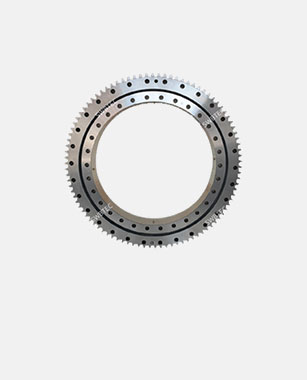
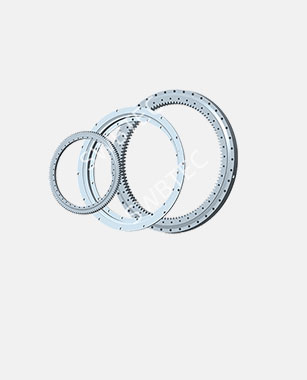
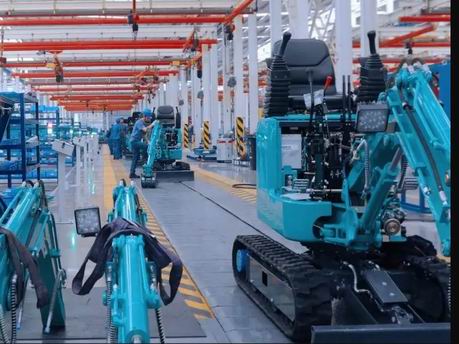
Apr 27 2022
SWTEC slewing bearing attended HANNOVER MESSE Exhibition in 2017
Read More >

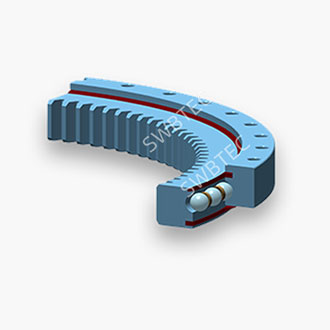
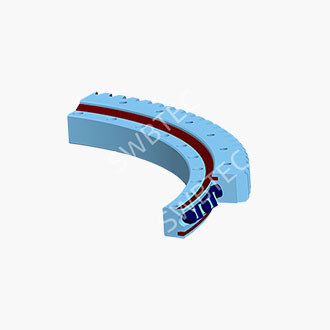
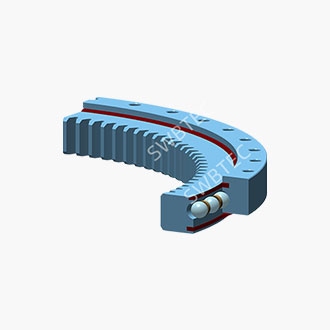
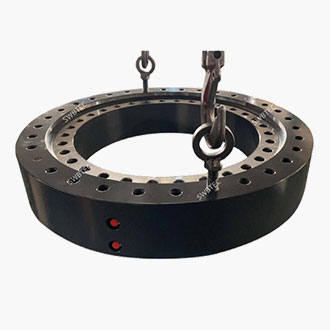
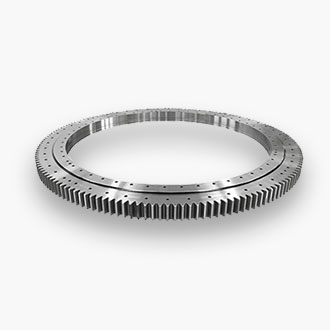
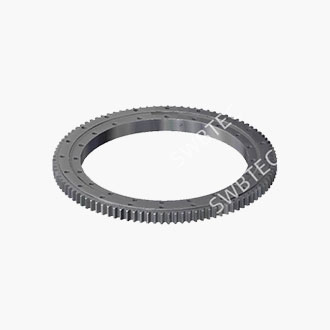
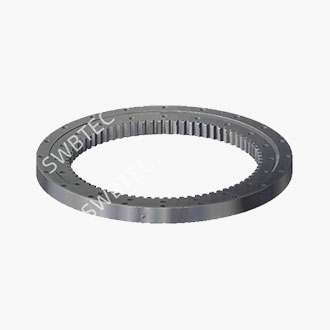
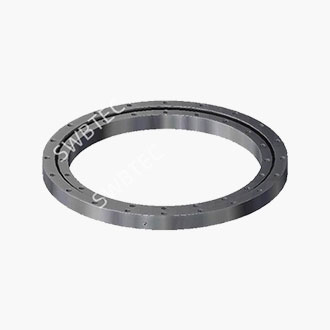
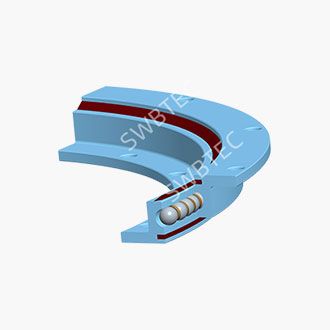
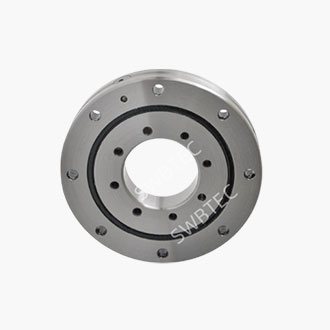
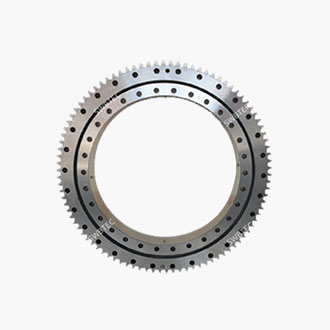
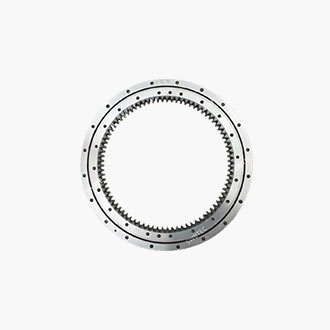
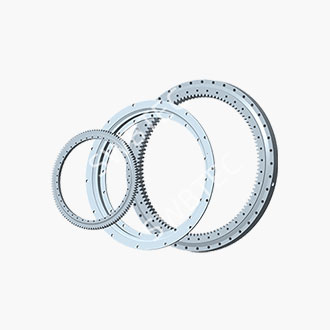
Balancing Weight Reduction and Cost Optimization: SWBTEC’s Technical Approach to Ensuring the Load-Carrying Capacity and Safety of Slewing Bearings
Currently, the demands of original equipment manufacturers (OEMs) in industries such as construction machinery and robotics are undergoing profound changes regarding slewing rings. On one hand, lightweighting of complete machines has become a key strategy for improving energy efficiency and aligning with the “Dual Carbon” policy; on the other hand, intensifying market competition has created sustained pressure to reduce costs across all links in the supply chain. How to achieve slew bearing weight reduction and cost optimization while meeting load-bearing capacity and safety margin requirements has become a core challenge for slewing bearing manufacturers. Drawing on years of design and manufacturing experience, SWBTEC offers a systematic solution across the following dimensions.
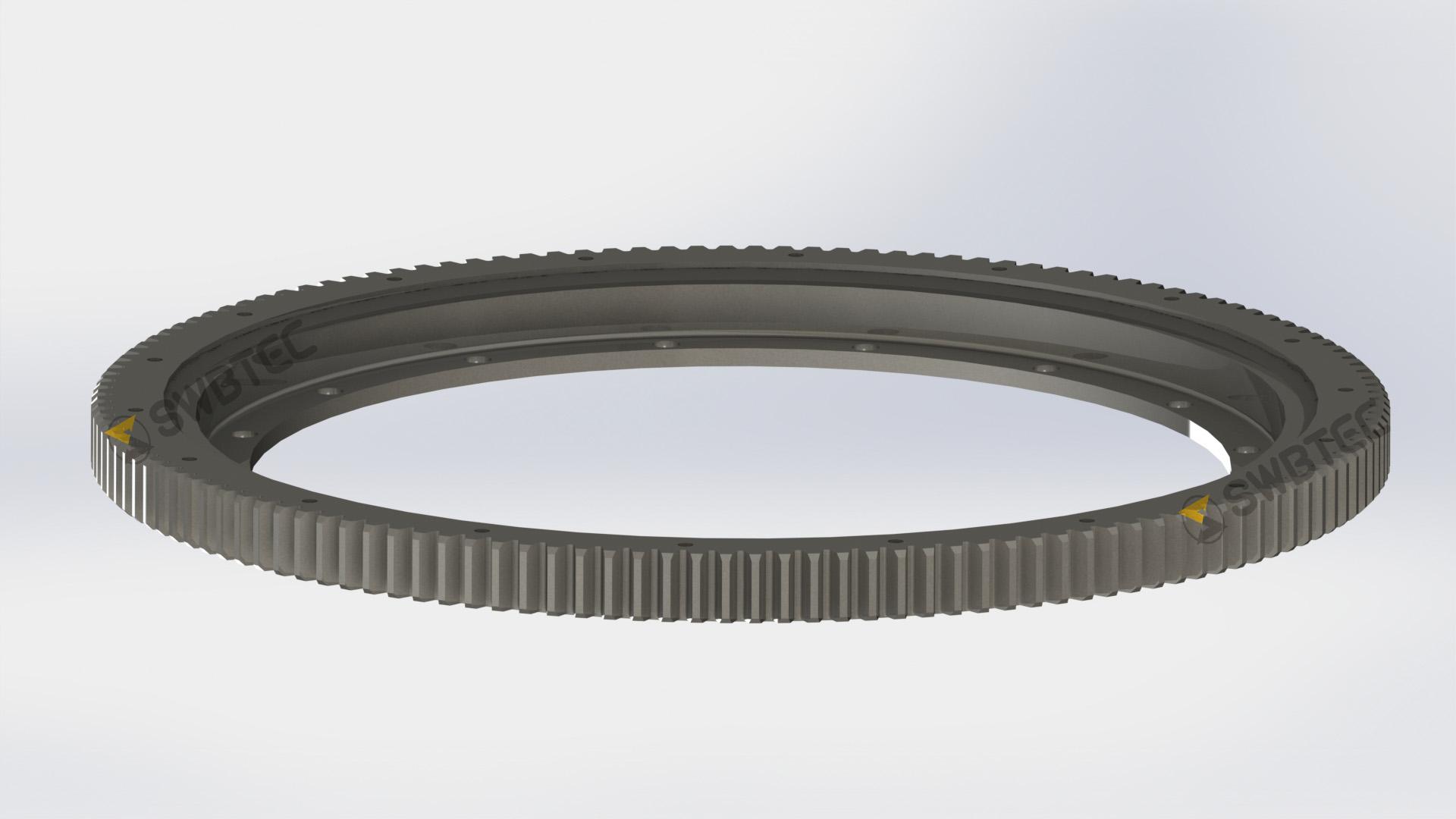
Traditional slewing bearing designs often rely on empirical formulas and conservative safety factors, resulting in overly heavy structures. SWBTEC employs a combination of measured load spectra and finite element simulation to implement differentiated designs tailored to specific host machine operating conditions (such as the start-stop impact of excavator slewing or the frequent boom swing of cranes). By optimizing the stress distribution on raceways and refining the verification of root bending strength, the previously uniform safety factors are adjusted to values tailored to specific operating conditions. While ensuring compliance with ISO/GB standards for static load capacity and dynamic life, typical products achieve weight reductions of 6%–10%.
Lightweighting does not mean thinning the raceways of slew rings; rather, it involves maintaining fatigue life under equivalent or higher stress levels. SWBTEC utilizes high-quality 42CrMo and 50Mn materials from major domestic manufacturers, combined with precise control of induction hardening process parameters, to achieve an optimal balance between raceway surface hardness, hardened layer depth, and core toughness. Simultaneously, localized weight-reduction designs are implemented in non-load-bearing critical areas (such as around mounting holes and non-meshing tooth crown regions), validated through bench fatigue testing. Improved material utilization reduces the weight of individual components, directly leading to lower raw material costs.
The core of cost reduction lies in minimizing waste and improving first-pass yield. SWBTEC has introduced Process Capability Index monitoring in processes such as raceway grinding, gear ring hobbing / shaping, and assembly to control dimensional variation and reduce rework rates. Additionally, for models with stable production batches, dedicated tooling and semi-automated inspection lines have been developed to shorten auxiliary time. Furthermore, in collaboration with original equipment manufacturers (OEMs), we conduct value engineering analyses to eliminate unnecessary technical specifications that have remained unchanged for years (such as raceway hardness far exceeding actual requirements or excessively stringent tooth-to-tooth clearance requirements), thereby achieving “design-to-need and quality-based delivery.”
Any structural or process adjustments must undergo comparative bench testing and on-site durability tracking, as well as inspection by third-party professional institutions. SWBTEC has established an in-house comprehensive slewing ring bearing test bench capable of simulating combined loading of axial, radial, and overturning moments, while real-time monitoring tracks raceway plastic deformation, ball and roller wear, and tooth surface pitting. Only products that pass service life evaluations meeting or exceeding the original design’s performance standards are approved for mass production. This closed-loop mechanism ensures that lightweighting and cost-reduction measures remain strictly within safety parameters.
OEMs' demands for lightweighting and cost reduction essentially reflect higher expectations for the design capabilities and manufacturing efficiency of slewing bearings. SWBTEC does not view these two objectives as mutually exclusive; rather, through precise design, material optimization, process upgrades, and rigorous validation, we deliver lighter, more price-competitive products while ensuring load-bearing capacity and safety. We are committed to deep collaboration with OEM customers across various industries to jointly advance the rationalization and high-quality evolution of slewing rings(turntable bearing).
If you have question,please feel free to ask us via slewing rings contact.