English
  日本語
日本語  français
  Deutsch
  Español
  italiano
  русский
  português
  العربية
  Türkçe
  Polska
  Nederland
Jan 11 2024
Mechanical Design - Rotary Bearing Transportation, Installation, and Maintenance
Read More >

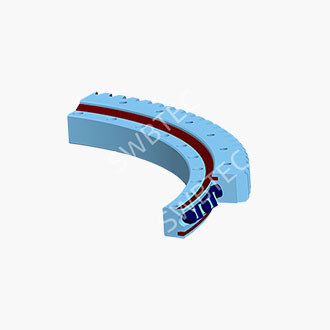
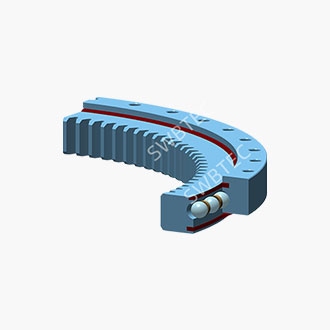
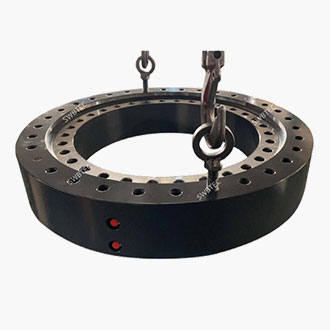
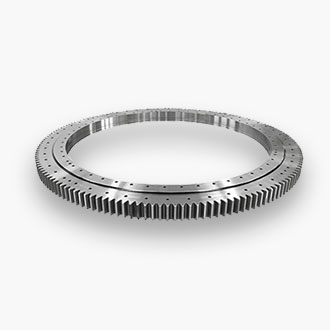
Heat Treatment Deformation—A Black Hole in Finishing Costs: How SWBTEC Uses Engineering Solutions to Close the Gap
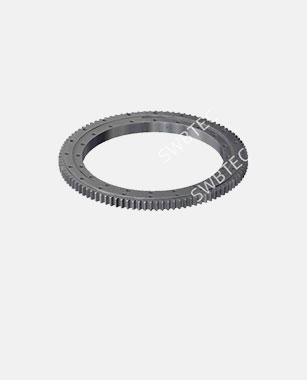
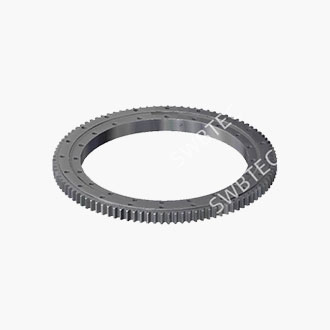
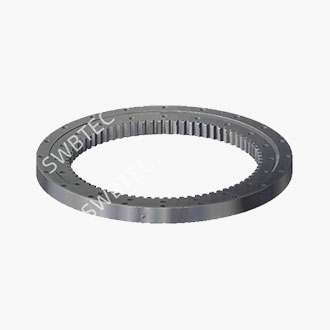
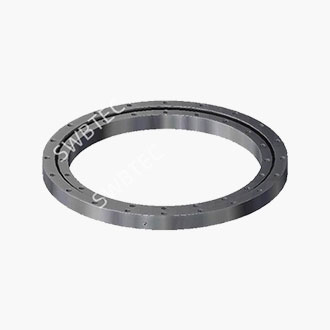
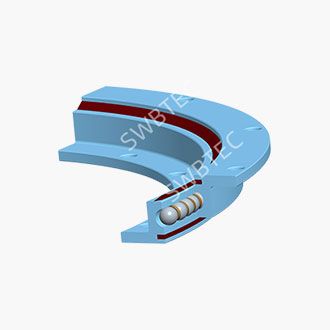
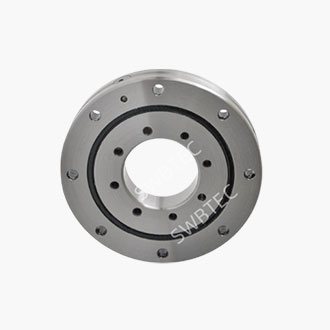
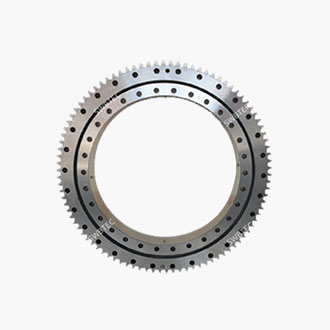
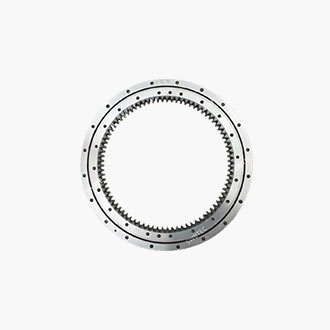
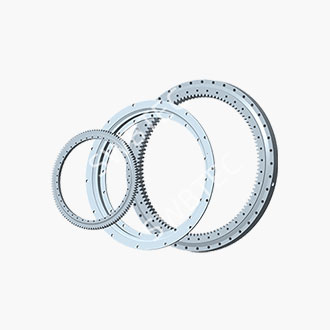
As an engineer who has been working with slewing bearings for many years, I am all too aware of what heat treatment deformation entails. When the rings lose their roundness or become warped after quenching, subsequent finishing operations require repeated turning and grinding, doubling labour hours and causing a sharp rise in tool wear; even a slight increase in the scrap rate represents a significant financial loss. It is an industry consensus that the heat treatment process has the greatest impact on the deformation of slewing bearing rings. SWBTEC has devoted considerable effort to this issue over the years; below, I shall discuss from an engineering perspective how we control deformation in the roundness and parallelism of the rings.
I. Pressurised Quenching — ‘Stifling’ Deformation in its Infancy
Quenching deformation is fundamentally the result of the combined effects of thermal stress and microstructural stress—thermal stress arises from the temperature difference between the surface and the core during cooling, whilst microstructural stress is superimposed due to asynchronous phase transformations. The higher the heating temperature, the longer the heating time, and the deeper the hardened layer, the greater the deformation. Our approach is straightforward: to ‘constrain’ the rings during the quenching and cooling stage.
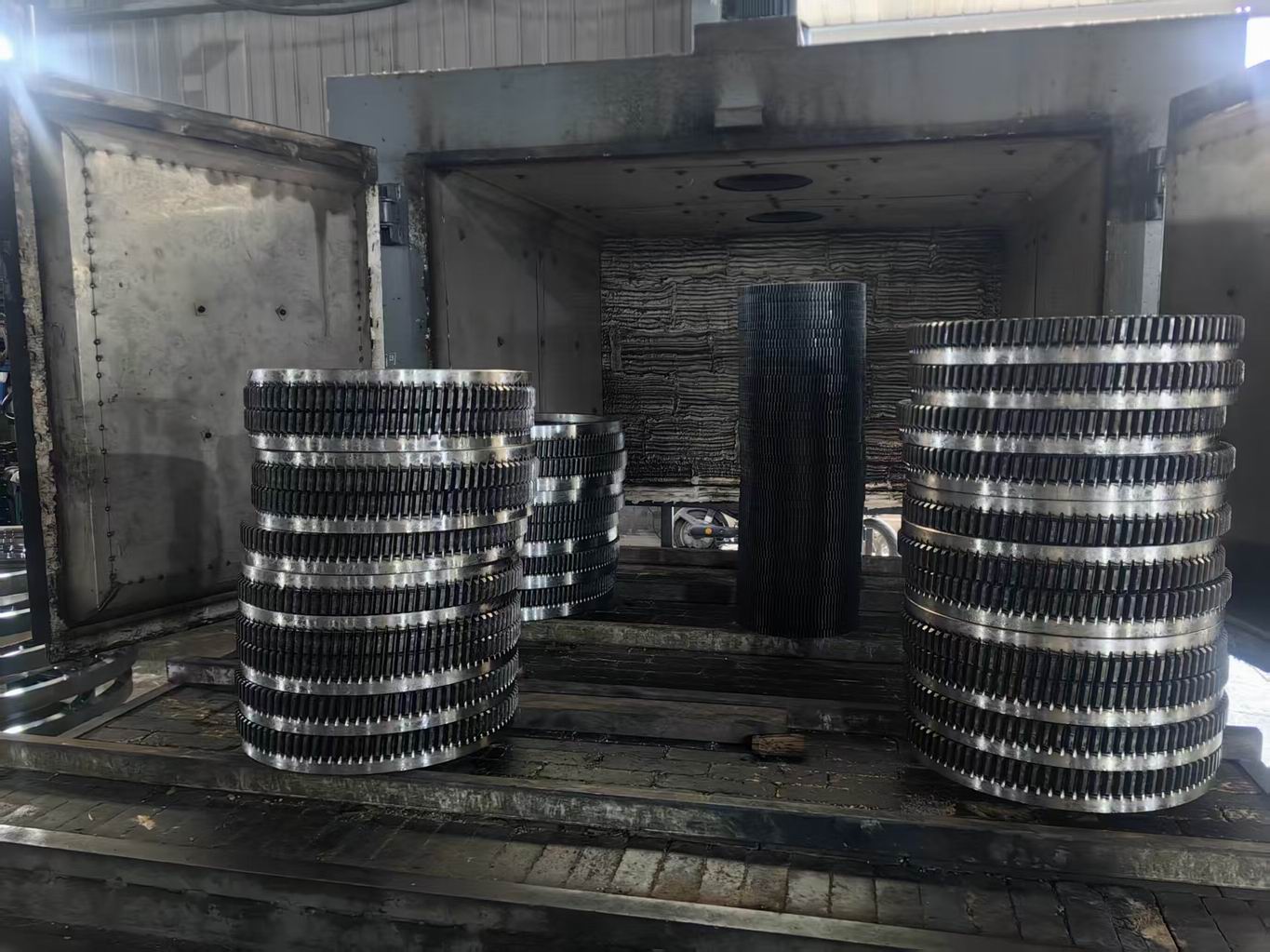
Specialised quenching press + contouring dies. After the ring has been heated to the austenitic state, it is immediately transferred to the quenching press, where radial and axial dies apply constraints to the ring. The radial dies restrict roundness expansion from both the inner and outer directions, whilst the axial pressure plate restricts end-face warping. The dies maintain constant pressure whilst the quenching medium is sprayed, until the ring has cooled sufficiently for the martensitic transformation to be complete. This ‘shape-restrained quenching’ method essentially uses external forces to counteract phase-transition expansion and thermal contraction, thereby limiting deformation to a controllable range.
Real-time compensation of inductor orientation and position. The raceways of slewing bearings are subjected to mobile surface induction hardening; during the quenching process, the ovality and flatness of the ring vary dynamically. We have installed a positioning and compensation system on the quenching machine, which collects real-time data on angular deviations of the raceway surface and adjusts the position and orientation of the inductor online. This system resolves the issue that traditional ‘preset compensation values’ cannot adapt to dynamic deformation, and is far more stable than manual intervention.
Refined process parameters. Output power, heating time and inductor gap are tailored to each model based on the ring’s wall thickness and diameter. Whilst ensuring the required hardness and depth of hardening, we minimise the heat-affected zone as much as possible. The empirical data accumulated over the years has enabled us to predict the deformation trends for each product, allowing us to progressively narrow the process window.
II. Deformation Compensation — Providing a Sufficient ‘Safety Margin’ for Finishing
Pressure quenching can keep deformation of slew gear to a minimum, but it is unrealistic to eliminate it entirely. Our second line of defence is deformation compensation.
Reasonable allocation of hot and cold working allowances. A heat treatment deformation allowance is reserved during the semi-finishing turning stage, whilst rings with stringent tolerance requirements are specifically designed with a deformation allowance. As shrinkage patterns vary across different models and wall thicknesses, we have mapped the shrinkage and roundness variation curves for each process through long-term monitoring and measurement. These curves guide the setting of allowances for each product—ensuring that post-quenching deformation can be accommodated by subsequent machining, whilst avoiding excessive allowances that would waste machining time.
Mechanical straightening after tempering. Once quenching and tempering are complete, rings that still exhibit localised roundness or flat
ness deviations beyond tolerance are straightened and corrected. Specialised jigs, in conjunction with a hydraulic system, are used to apply corrective forces to the rings, pulling the deformation back within the tolerance band. Although this process adds to the cost, it is cost-effective overall compared to direct scrapping or excessive machining.
III. Results and Reflections
By combining pressure quenching with deformation compensation, the variation in roundness and parallelism has been significantly reduced. This has allowed for a reduction in the machining allowance during the finishing stage, resulting in tangible improvements in tool life and machining efficiency. Of course, this is by no means the end of the journey—there is still room for further optimisation in the distribution of stress fields during heat treatment and the uniformity of the cooling medium flow. There are no once-and-for-all solutions to engineering problems; only the patience to continuously approach the optimum.
As a specialist manufacturer of slewing rings, we are committed to continuously improving our quenching processes and enhancing product quality, thereby helping our customers reduce their procurement costs. For further information, please follow us: ngswbtec