English
  日本語
日本語  français
  Deutsch
  Español
  italiano
  русский
  português
  العربية
  Türkçe
  Polska
  Nederland
Mar 15 2023
How to Remove Burrs from the Slewing Bearing?
Read More >

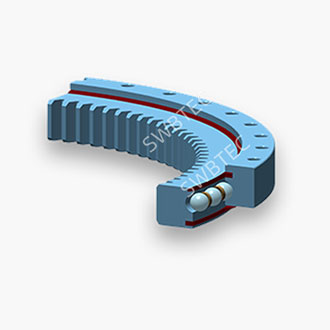
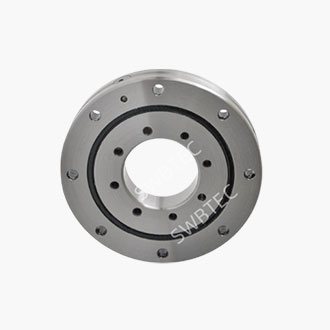
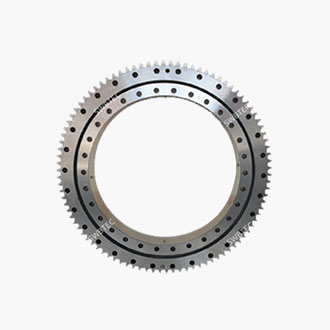
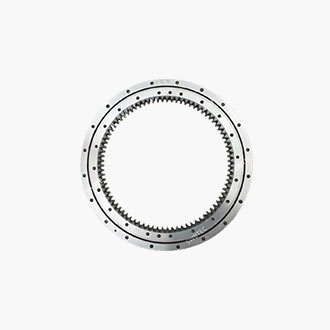
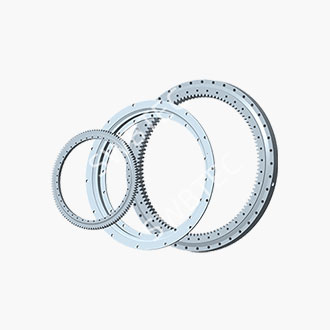
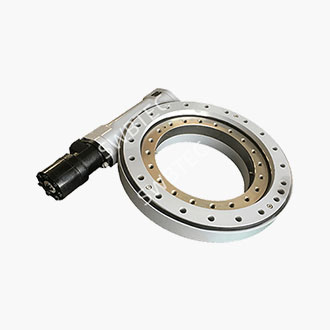
50Mn and 42CrMo: Why We Insist on Using Quenched and Tempered Materials and Reject Non-Quenched and Tempered Alternatives?
In the manufacture of slewing bearings, the choice of material is the first critical factor determining the product's service life and reliability. Currently, the most widely used ring materials in the industry are 50Mn and 42CrMo. Both materials have their own advantages—50Mn offers good toughness and moderate cost, whilst 42CrMo boasts excellent hardenability and superior fatigue resistance. However, in actual production, the quality of 50Mn and 42CrMo of the same grade can vary dramatically.
The key lies in a single process: quenching and tempering.
SWBTEC's stance is unequivocal—the 50Mn and 42CrMo we use must not only be produced by major domestic manufacturers but must also have all undergone standard quenching and tempering heat treatment. We refuse to use materials of the same grade that have not been quenched and tempered. This is not to increase costs, but out of the most fundamental respect for product quality.
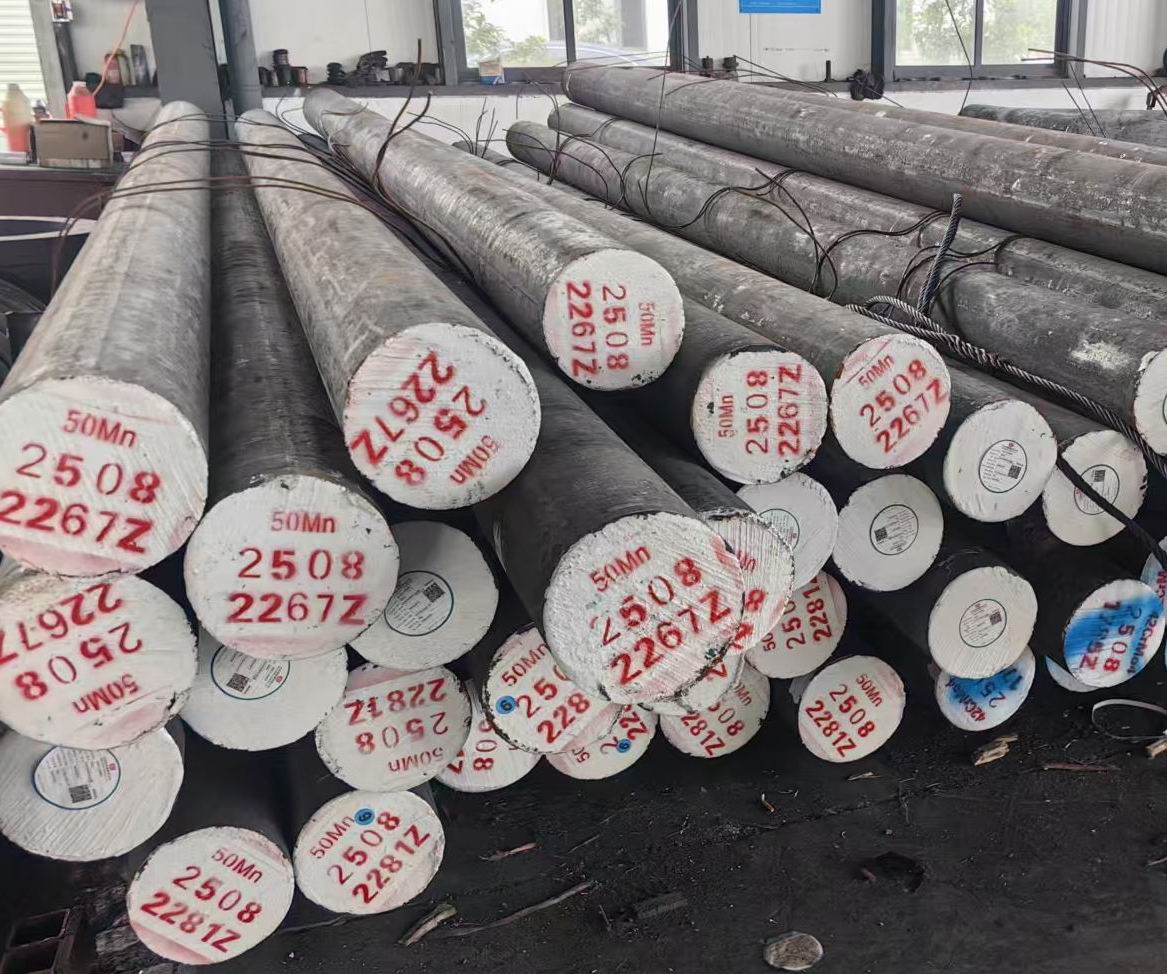
I. 50Mn and 42CrMo: The Correct Approach to the Industry's Mainstream Materials
1.1 50Mn – An Economical and Reliable General-Purpose Choice
50Mn is a medium-carbon manganese steel characterised by high strength, elasticity and hardness, and is typically used in a quenched and tempered condition. In the slewing bearing industry, 50Mn has become the primary material for conventional operating conditions—such as tower cranes, concrete pump trucks and small-to-medium-sized port machinery—thanks to its good toughness and moderate hardenability. Following surface hardening, it can achieve a hardness of HRC 55–62, meeting the load-bearing and wear-resistance requirements of most construction machinery.
1.2 42CrMo – A Reliable Choice for High-Performance Applications
When operating conditions become more demanding—such as in wind turbine yaw and pitch bearings, large gantry cranes, tunnel boring machines and offshore engineering platforms—42CrMo (42CrMo4) becomes the material of choice. 42CrMo is a chromium-molybdenum alloy steel containing Cr and Mo elements; it possesses excellent hardenability and is suitable for large-section components. Compared with 50Mn, 42CrMo offers superior tempering stability, fatigue strength and surface hardness, as well as significantly better yield strength and hardenability, enabling it to better withstand high loads and impact. Even in extra-large dimensions exceeding 3 metres in diameter, 42CrMo still ensures a uniform microstructure and minimal deformation.
However, regardless of whether 50Mn or 42CrMo is selected, there is one common prerequisite—the steel must undergo standard quenching and tempering heat treatment.
II. What exactly is quenching and tempering of slew ring bearings? Why is it indispensable?
2.1 The nature of quenching and tempering
Tempering is a combined heat treatment process comprising quenching followed by high-temperature tempering. Specifically, it involves heating the steel to a temperature above the critical point and holding it there, followed by rapid cooling (quenching) to obtain a martensitic microstructure; this is then followed by high-temperature tempering to transform the microstructure into tempered sorbite. The core objective of this process is to enable the steel to maintain high strength whilst also possessing good ductility and toughness, thereby achieving excellent overall mechanical properties.
2.2 The Three Key Benefits of Tempering for Slewing Rings
Firstly, the difference in hardness is substantial. The hardness of untreated material ranges from only 140 to 170 HB, whereas that of quenched and tempered material can reach 207 to 262 HB. This difference of over 100 HB translates into a world of difference in load-bearing capacity and wear resistance in practical applications.
Secondly, quenching and tempering lays the foundation for surface hardening. The raceways of slewing bearings require a surface hardness of HRC 55–62, typically achieved through methods such as medium-frequency quenching. If the base material has not undergone proper tempering as a pre-treatment, the quality and stability of the raceway quenching cannot be guaranteed. The base material of the rings in the tempered state provides a solid support for the hardened layer—much like the difference in load-bearing capacity between a thick wooden plank resting on concrete versus one resting on sand.
Thirdly, microstructural uniformity determines fatigue life. During operation, slewing bearings are subjected to the combined effects of axial forces, radial forces and overturning moments. Tempering heat treatment refines the grain structure and ensures microstructural uniformity, thereby reducing the risk of stress concentration and fatigue failure at source.
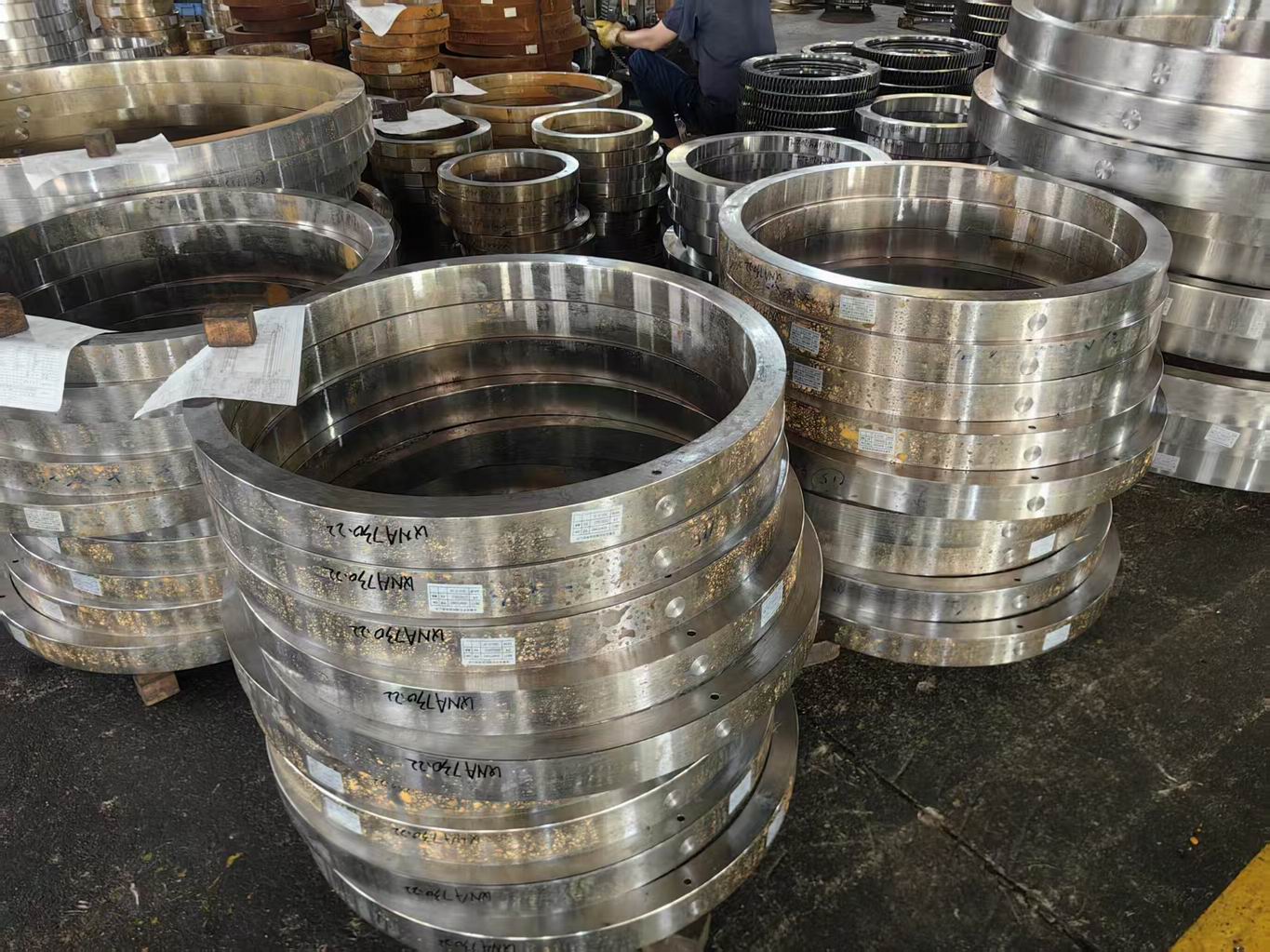
III. Non-tempered 50Mn and 42CrMo: Seemingly cost-effective, but in fact posing significant risks
3.1 The Chaos of Skipping Tempering in the Market
There are many manufacturers of slewing rings, with quality and prices varying widely; however, the primary factor influencing price is product quality, which is largely determined by the quality of the raw materials. There is a significant price difference between tempered and non-tempered raw materials. To keep quotations low and secure orders, some manufacturers choose to omit or simplify the tempering process, processing the rings directly from non-tempered 50Mn or 42CrMo. Such products do indeed offer a price advantage, but at what cost? The cost is a drastic reduction in the product's service life. The hardness of non-tempered material is only 140–170 HB, whereas that of tempered material ranges from 207 to 262 HB. Under equivalent load conditions, materials with lower hardness are more prone to plastic deformation, raceway crushing and premature wear.
3.2 Why non-quenched and tempered slewing bearings cannot be used
Some manufacturers may argue: "Since the raceways are to be surface-hardened anyway, it doesn't matter whether the matrix is quenched and tempered or not." This is a completely mistaken view.
Tempering not only provides hardness to the base material but, more importantly, ensures microstructural uniformity and a balance of strength and toughness. If the base material has not been tempered, the microstructure will be coarse and non-uniform; even if surface hardening achieves the required hardness, under heavy loads the base material will be unable to provide sufficient support for the hardened layer, causing the hardened layer to collapse or flake off. This is akin to laying a layer of hardwood planks on sandy ground—no matter how hard the surface, if the foundation is soft, problems will inevitably arise sooner or later. Once a slewing bearing fails, the cost of replacement far exceeds the value of the bearing itself. Equipment downtime, lifting, dismantling and reinstallation—these hidden costs are often several times, or even dozens of times, the purchase price. By seeking short-term savings, it is the customer themselves who ultimately pays a far greater price.
IV. SWBTEC's Stance: Quality First, No Pursuit of Short-Term Profits
At SWBTEC, we have always believed in a simple principle: Turntable bearings / Bearings turntable are core components of mechanical equipment, and their reliability is directly linked to the safety of the entire machine and the personal safety of operators. In this field, there are no shortcuts.
We insist on using quenched and tempered 50Mn and 42CrMo steels and refuse to use non-quenched and tempered materials, not because we are unaware that the latter are cheaper, but because we understand that:
• The improved hardness and microstructural uniformity achieved through quenching and tempering are the fundamental guarantee of a slewing bearing's long-term reliable operation;
• Materials and manufacturing processes validated over decades are far more trustworthy than any 'process-cutting' shortcuts;
• Providing customers with products that stand the test of time is far more important than chasing short-term profits.
We do not seek to drive down our quotations by cutting corners. What we strive for is that every slewing bearing operates reliably throughout its design life—this is the greatest mark of respect we can show our customers.
When procuring slew bearings, one must not focus solely on unit price; material, manufacturing processes, precision and after-sales service must all be taken into account. SWBTEC is committed to providing customers with products they can truly rely on, by adhering to higher standards and stricter requirements. If you are seeking a trustworthy partner for slewing bearings, please feel free to contact us at any time; As a slewing ring bearings manufacturer in China, our technical team will provide you with professional selection advice and end-to-end service support.
________________________________________
FAQ (Frequently Asked Questions)
Q1: What is the difference between 50Mn and 42CrMo? How should I choose between them?
A: 50Mn is our main cost-effective material, offering good toughness and moderate cost, and is suitable for standard operating conditions such as tower cranes and concrete pump trucks. 42CrMo is the preferred high-performance option, offering excellent hardenability and superior fatigue resistance. It is suitable for large-scale applications, such as wind power, offshore engineering and shield tunnelling machines, where heavy loads or harsh environments are encountered. Specific selection requires a comprehensive assessment based on the load spectrum, operating conditions and service life requirements; we recommend consulting our technical team.
Q2: How significant is the difference in performance between quenched and tempered 50Mn/42CrMo and unquenched and untempered versions?
A: The difference is very significant. The hardness of unquenched and untempered material is only 140–170 HB, whilst that of quenched and tempered material can reach 207–262 HB. This difference of over 100 HB directly determines the product’s load-bearing capacity, wear resistance and service life.
Q3: Are all your slew gear subjected to quenching and tempering?
A: Yes. All SWBTEC slewing bearing rings are made from quenched and tempered 50Mn or 42CrMo steel, and are manufactured in strict accordance with the standard quenching and high-temperature tempering process to ensure that every product meets the design requirements for hardness and microstructure.
Q4: How long will a slewing bearing last if it has not been quenched and tempered?
A: Slewing bearings that have not undergone standard tempering treatment have low base material hardness and an uneven microstructure, and the quality of the raceway hardening is also difficult to guarantee. In actual use, raceway wear, pitting or even crushing may occur within a few months to a year. In contrast, high-quality products that have undergone standard tempering and surface hardening can operate reliably for several years or even longer under normal operating conditions.
Q5: How does SWBTEC ensure the quality of the tempering process?
A: SWBTEC inspects every batch of raw materials and carries out random checks on the hardness and microstructure after tempering; where necessary, individual items are inspected to ensure compliance with industry standards. Finished products are shipped with a complete test report, and every unit is fully traceable and verifiable.
Q6: Can you customise the material to suit my operating conditions?
A: Yes. In addition to the standard 50Mn and 42CrMo grades, we can also select other grades of surface-hardened steel, such as S48C and 45#, based on the specific operating conditions provided by the customer. Our technical team will optimise material selection to meet your load, environmental and service life requirements.
Q7: What about your quality assurance and after-sales service?
A: SWBTEC has a comprehensive quality management system and end-to-end service capabilities, providing professional technical support ranging from selection calculations and installation guidance to fault diagnosis. We take responsibility not only for our own products but also for the operational performance of every customer's equipment.