English
  日本語
日本語  français
  Deutsch
  Español
  italiano
  русский
  português
  العربية
  Türkçe
  Polska
  Nederland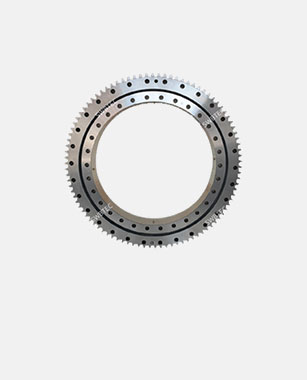
Aug 10 2022
How to Adjust the Clearance of Slewing Bearing? How to Reduce the Noise of the Slewing Ring Gear
Read More >

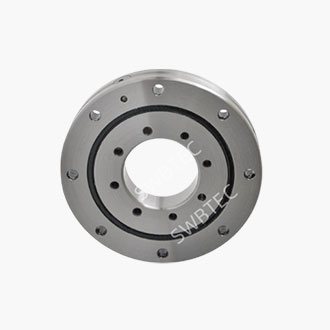
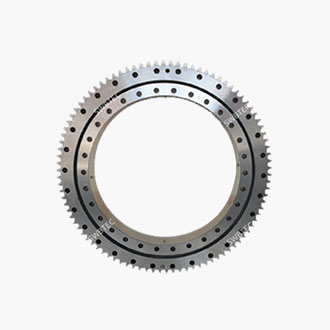
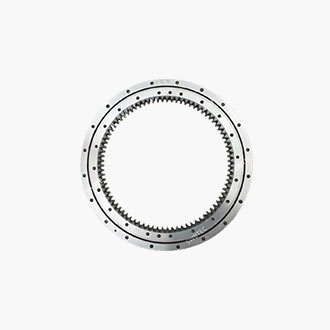
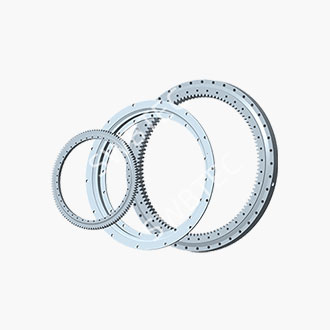
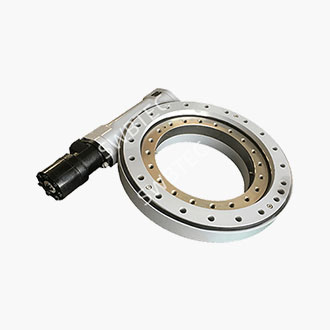
A Full Understanding of Slewing Bearings
I. What is a slewing bearing?
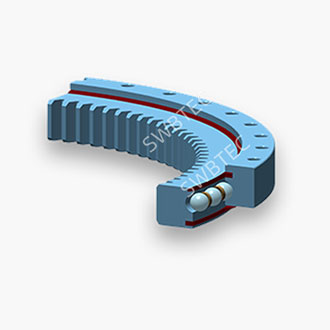
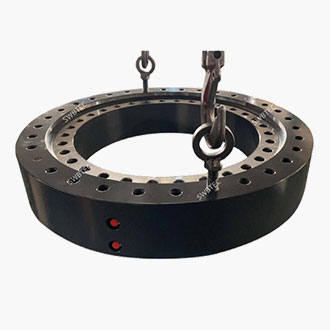
A slewing bearing, also known as a turntable bearing, rotary bearing or swivel bearing, is referred to in English as a 'slewing bearing', 'slewing rings' or 'turntable bearing'. In the industrial sector, it is often colloquially referred to as the 'joint of a machine'.
Essentially, a slewing bearing is a large-scale bearing capable of withstanding combined loads; it can simultaneously bear significant axial loads, radial loads and overturning moments. Unlike standard bearings, which are typically optimised for a single primary load direction, slewing bearings are designed for more complex rotational operating conditions—where loads often originate from multiple directions simultaneously, and the rotating platform must remain stable throughout its entire operation.
Slewing bearings have an extremely wide range of applications; they can be found in sectors ranging from construction machinery, marine equipment and metallurgical machinery to wind power, solar power and medical equipment.
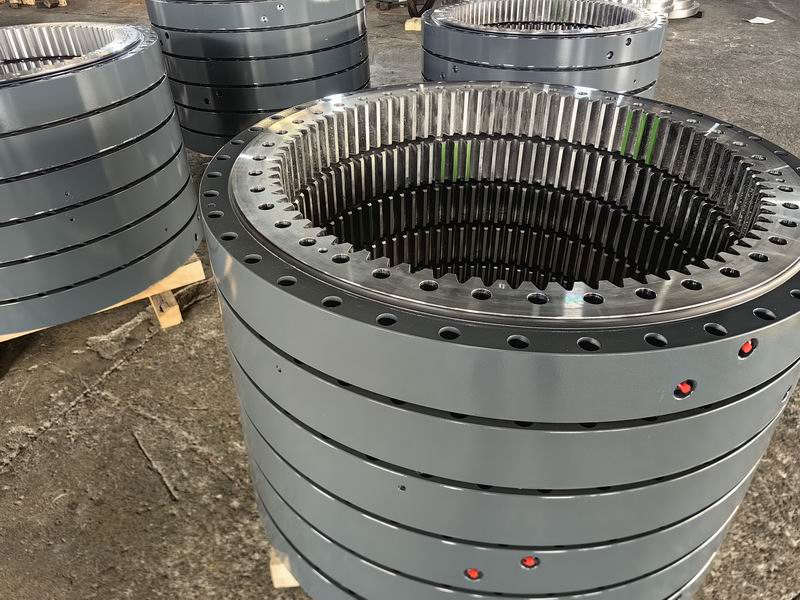
II. Basic Structure of Slewing Bearings
Although slewing bearings come in many different configurations, their basic composition is largely similar. A complete slewing bearing mainly consists of the following core components:
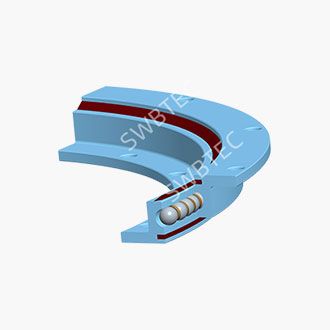
Inner ring and outer ring: The inner and outer rings together form the raceway, which transmits loads between the rotating and stationary structures. The geometric shape and surface finish of the raceway directly affect the load-carrying capacity and service life of the bearing.
Rolling elements: These may be steel balls or rollers. Steel balls are typically used for light loads and high-speed applications, whilst rollers are employed in situations involving heavy loads or where higher rigidity is required.
Cage (separator or spacer): This evenly spaces the rolling elements, prevents them from coming into contact with one another, and ensures that the load is distributed uniformly around the circumference of the raceway.
Sealing devices: These prevent the ingress of contaminants and retain the grease within the bearing. Seal failure can directly lead to premature bearing failure.
Mounting holes and gearing: Most slewing bearings are fitted with a system of bolt holes, allowing them to be used directly for structural mounting; many are also equipped with internal or external teeth to facilitate rotation via a pinion or worm gear.
In addition, slewing drive units typically consist of components such as a worm gear, housing and motor.
III. Main Types of Slewing Bearings
Depending on their structural design, slewing bearings are primarily classified into the following types:
1. Single-row four-point contact ball slewing bearings
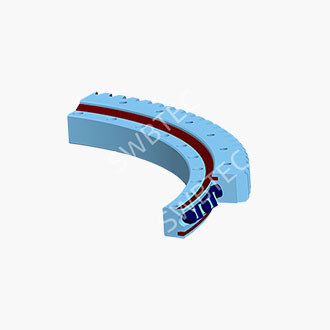
This type consists of two rings and features a single row of steel balls as rolling elements, with individual spacers between the balls. The balls make four-point contact with the raceways, enabling the bearing to withstand axial forces, radial forces and overturning moments simultaneously. Characterised by its compact structure and light weight, it is suitable for engineering machinery such as rotary conveyors, welding manipulators, small and medium-sized cranes, and excavators.
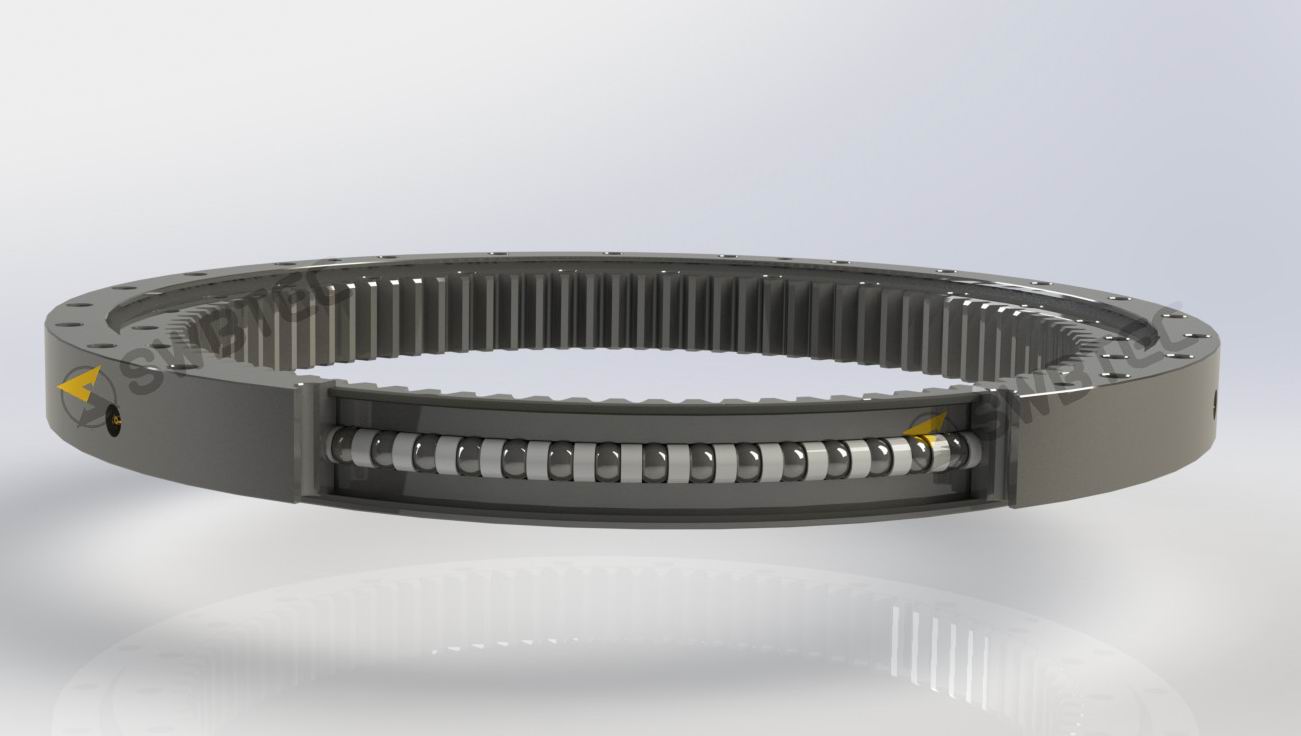
2. Double-row, different-diameter ball slewing bearing
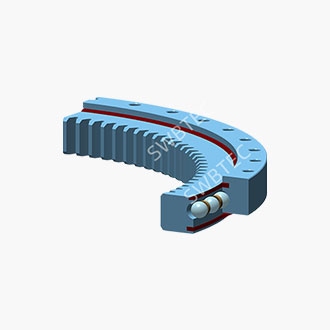
This type comprises three rings, with the upper and lower rows of balls having different diameters. The load-bearing angles of both the upper and lower arc-shaped raceways are 90°, enabling it to withstand substantial axial forces and overturning moments. With relatively large axial and radial dimensions and a robust structure, it is particularly suitable for loading and unloading machinery such as tower cranes and mobile cranes.
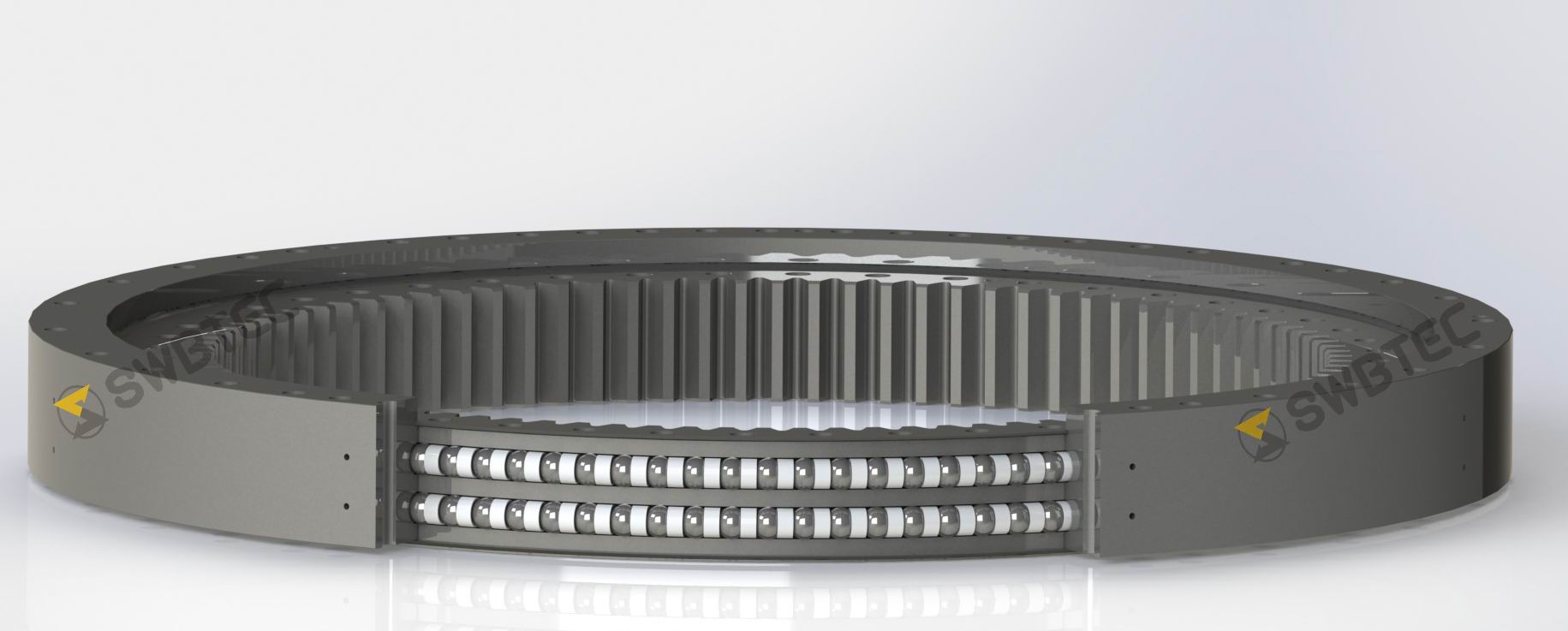
3.Double-row, same-diameter ball slewing bearing
Double Row Ball Slewing Bearing usually include same size rolling element and different size rolling element. The heavy duty ball bearing turntable is composed with two rows ball which can bear much higher axial, radial and overturning moment that is widely used on heavy equipment, like mining equipment and large crawler crane.
4. Single-row crossed-roller slewing bearings
Comprising two rings, the rollers are arranged in a 1:1 crossed pattern. With a compact structure, high manufacturing precision and minimal assembly clearance, they can simultaneously withstand axial forces, overturning moments and substantial radial forces. They are widely used in lifting and transport equipment, construction machinery and defence applications.
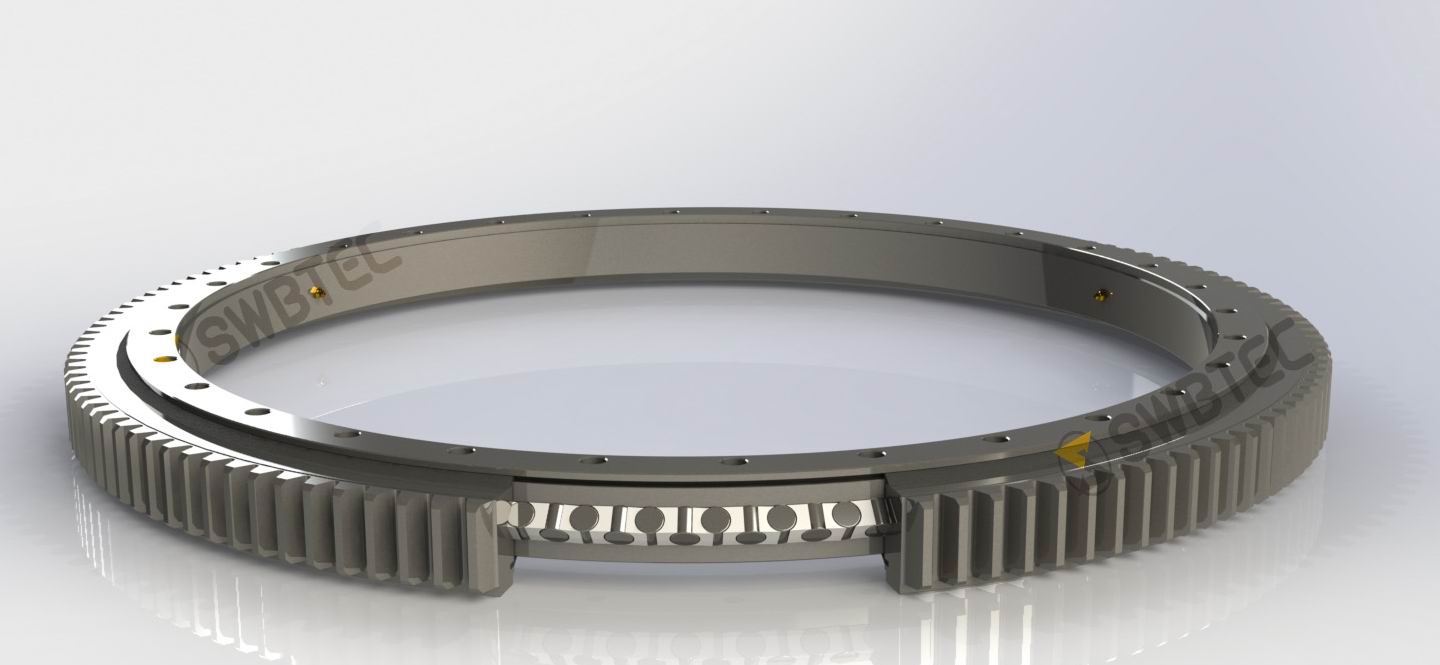
5. Three-row roller slewing ring
Featuring three rings, with separate upper, lower and radial raceways, the load capacity of each row of rollers can be precisely determined. This is the type with the highest load-bearing capacity among the four products, featuring larger axial and radial dimensions and a robust structure. It is particularly suitable for heavy machinery such as bucket-wheel excavators, mobile cranes, marine cranes and harbour cranes.
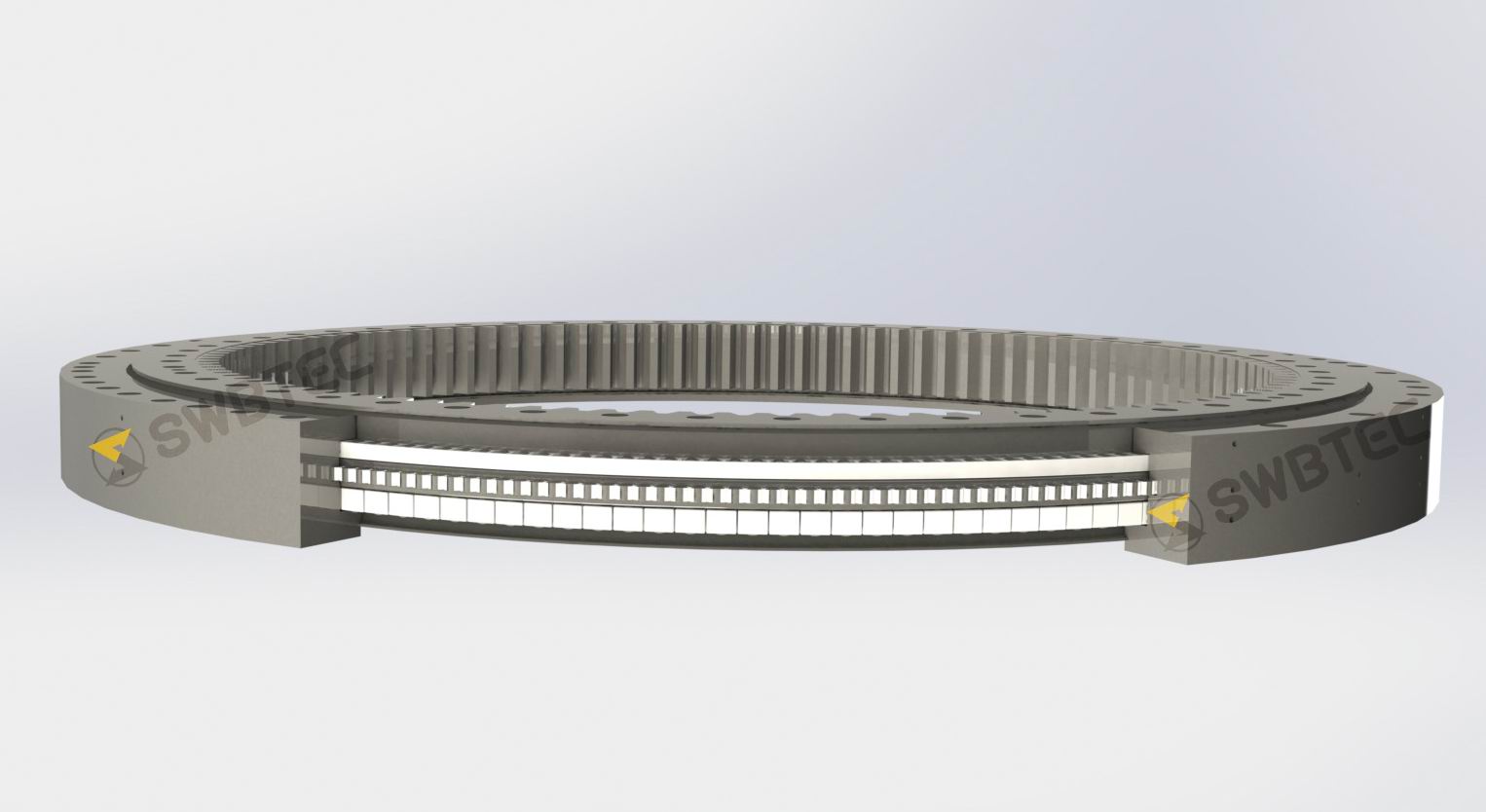
6. Light-duty Series Slewing Bearings
These share the same structural design as standard slewing bearings but are lighter in weight and offer smoother rotation; they are widely used in sectors such as food processing machinery, filling machinery and environmental protection machinery.
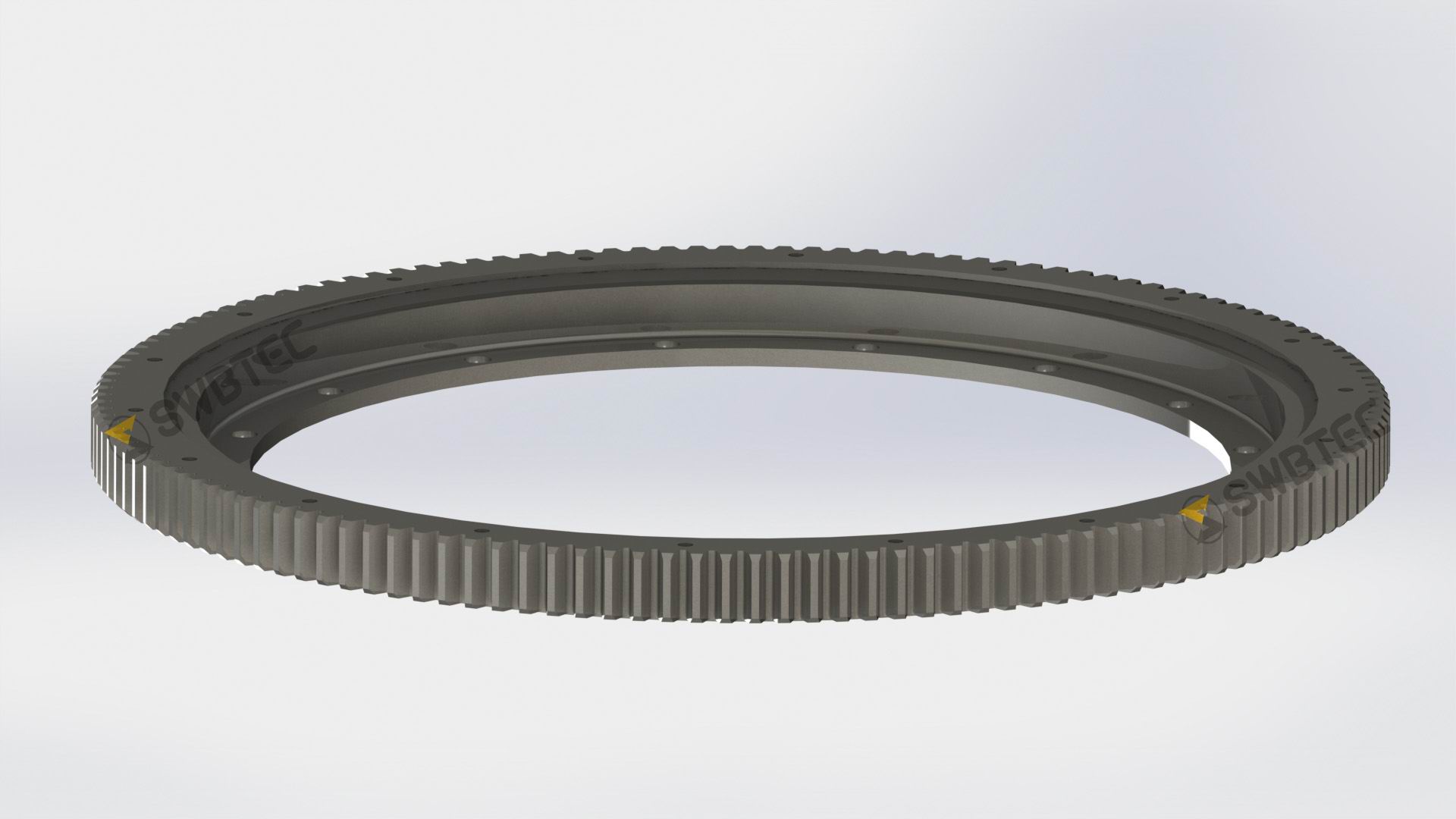
IV. Classification of Slewing Bearings by Tooth Configuration
Based on tooth configuration, slewing bearings can be divided into three types:
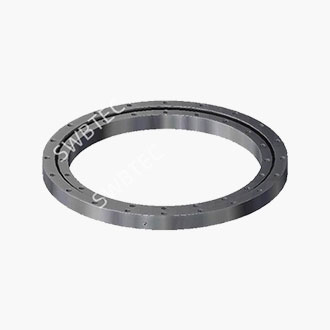
• Toothless: Without gears, suitable for applications where active drive is not required.
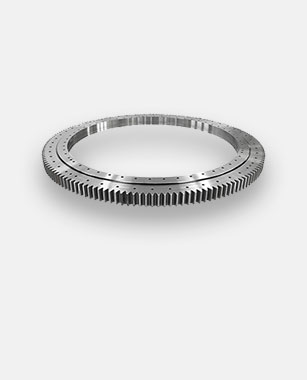
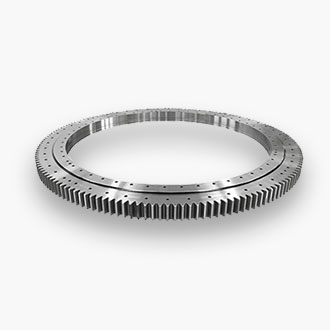
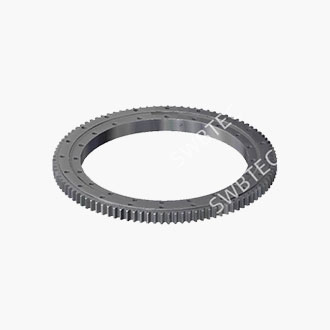
• External-tooth type: Gears are machined onto the outer ring, with the driven pinion meshing from the outside.
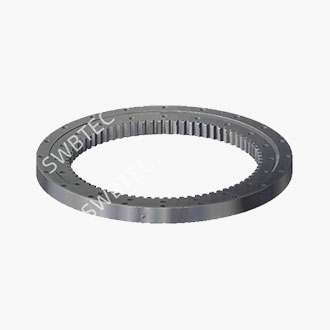
• Internal-tooth type: Gears are machined onto the inner ring, with the driven pinion meshing from the inside.
The integration of the tooth profile is a major design advantage of slewing bearings—machining the gears directly onto the inner and outer rings eliminates the need for a separate large gear, thereby simplifying the transmission system.
V. Application Areas of Slewing Bearings
Slewing bearings have an extremely wide range of applications, covering virtually all mechanical equipment that requires relative rotational movement and must withstand combined loads.
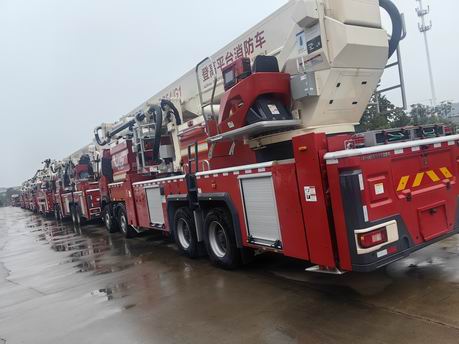
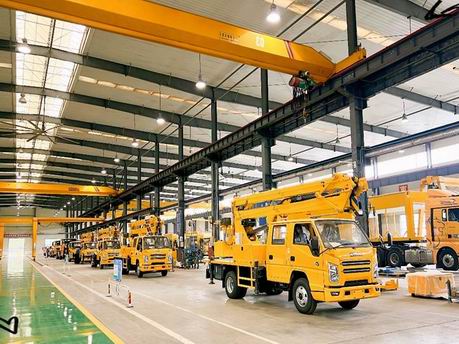
Construction machinery: This is the original and most widespread field of application for slewing bearings, including excavators, cranes (tower, mobile and crawler types), stacker-reclaimers, motor graders, road rollers, rock drilling machinery and tunnelling machines. Taking excavators as an example, slewing bearings support at least 60 per cent of the machine's total weight, and slewing operations account for 50% to 70 % of the entire working cycle.
New Energy Sector: Wind power and solar power generation equipment represent key application areas for slewing bearings. In wind turbines, slewing bearings are used in yaw and pitch control systems; in solar power generation, they are used in single- and dual-axis tracking mechanisms for photovoltaic tracking systems.
Port and marine machinery: Rotating bearings are used extensively in equipment such as port cranes and marine cranes.
Industrial robots: With the advancement of automation, rotating bearings are increasingly widely used in fields such as industrial robots and palletising robots.
Medical Equipment: High-end medical equipment, such as CT scanners and gamma knives, also relies on high-precision slewing bearings.
Other Fields: Metallurgical machinery, environmental protection equipment, defence products, radar scanning equipment, etc.
VI. Key Considerations for Selecting Slewing Bearings
Failures occurring during the operation of slewing bearings are often primarily attributable to inappropriate selection during the initial phase and inadequate maintenance and servicing subsequently. Appropriate selection requires consideration of multiple factors:
Load Calculation: It is essential to accurately calculate the axial forces, radial forces and overturning moments that the equipment will be subjected to during operation, whilst taking dynamic and impact loads into account. One should not rely solely on a single value; instead, the three types of loads generated by the operating conditions should be combined in the calculation.
Operating Condition Assessment: The equipment’s operating cycle, rotational speed and operating environment (temperature, dust, humidity, etc.) are all important factors in the selection process.
Selection of structural type: Different types of slewing bearings are suitable for different operating conditions—single-row ball bearings are suitable for applications where axial loads predominate and overturning moments are significant; double-row ball bearings are suitable for medium-load applications with low installation accuracy requirements; three-row roller bearings offer the highest load-carrying capacity and are suitable for heavy-duty applications with minimal deformation; crossed roller bearings are suitable for applications requiring high precision.
Safety margin: A safety margin must be incorporated during selection. Incorrect bearing selection can lead to premature failure and unplanned downtime; in heavy-duty equipment, it may even pose tangible safety risks.
Dimensions and Installation Space: Determine the bearing’s diameter, height and bolt hole layout based on the equipment’s installation space and structural layout.
VII. Key Points for the Installation of Slewing Bearings
Correct installation is a prerequisite for ensuring the normal operation of slewing bearings:
Pre-installation Preparation: After opening the packaging, check the certificate of conformity and nameplate to confirm the model is correct. The mounting surface must be smooth; remove any excess material such as paint residue, weld spatter and burrs.
Base Surface Inspection: Prior to installation, remove burrs, weld slag and oil contamination from the base surface. Use a spirit level to check the flatness of the base surface; any deviation must be kept within the permissible range.
Lifting and Positioning: Lift the slewing ring horizontally onto the mounting bracket, ensuring that the soft bands and shims are positioned in non-load-bearing or low-load areas.
Bolt tightening: This is the core step of the installation. High-strength bolts meeting the specified strength grade must be used, and they must be tightened symmetrically in a criss-cross pattern at 180° intervals. A torque wrench must be used to check the bolt torque.
Accuracy adjustment: Once installation is complete, accuracy adjustment and clearance checks must be carried out, including the inspection of tooth-side clearance.
VIII. Maintenance and Care of Slewing Bearings
Proper maintenance and care can significantly extend the service life of slewing bearings. Well-maintained industrial slewing bearings can typically achieve an operating time of between 10,000 and 30,000 hours under moderate operating conditions.
Lubrication Management: Lubrication is central to the maintenance of slewing bearings. Under normal operating conditions, ball-type slewing bearings should be lubricated once every 100 hours of operation, whilst roller-type slewing bearings should be lubricated once every 50 hours. In tropical regions, areas with high humidity, high dust levels or significant temperature fluctuations, as well as during continuous operation, lubrication should be carried out weekly. Each time grease is applied, the bearing must be filled to capacity until grease seeps out from the seals.
Bolt Inspection: After the first 100 operating hours, the bolts should be checked for looseness; a further check should be carried out at the 300-hour mark, and subsequently every 500 operating hours.
Tooth Surface Cleaning: Debris should be removed from the tooth surfaces after every 10 shifts of operation, and the surface should be re-lubricated with grease.
Long-Term Storage: Slewing bearings must be filled with grease both before and after prolonged periods of storage.
IX. Common Faults and Diagnosis of Slewing Bearings
Various faults may occur during the operation of slewing bearings; common ones include:
Abnormal noise: Causes of abnormal noise may include an uneven mounting surface, loose bolts, a lack of grease in the raceways, incorrect choice of lubricant, damaged seals, or severe wear of the raceways and rolling elements. Should abnormal noise occur, the machine must be shut down immediately for inspection.
Stiff Rotation: This may be caused by grease with excessive viscosity, poor fit of the mounting surfaces, lack of grease, or damaged seals.
Excessive Play (Looseness): This is usually caused by severe wear on the worm gear, drive gear and slewing bearing gear of the slewing reducer. Play can be checked using a dial gauge.
Abnormal system pressure or oil leakage: The hydraulic system and sealing devices must be inspected.
Meshing clearance issues: The meshing clearance between the slewing bearing and the reducer should generally be maintained between 0.2 and 0.6 mm. If the clearance is excessive, it must be reduced or the unit dismantled and overhauled.
X. Industry Standards and Materials for Slewing Bearings
The production of slewing bearings in China began in the early 1980s, organised by the Tianjin Construction Machinery Research Institute, which introduced the design and manufacturing technology from the former West German company Rothe Erde. The first industry standard, JB/2300-84, was published in 1984 and subsequently revised in 1999 and 2011 to become JB/T2300-1999 and JB/T2300-2011 respectively. This standard covers the definition of symbols, classification markings, technical parameters and test methods for slewing bearings, with a particular focus on specifying standards for component machining accuracy, assembly quality, load-bearing calculations, and installation and maintenance.
In terms of materials, the core components of slewing bearings are manufactured from surface-hardened steel (such as 50Mn and 42CrMo); the rolling elements are made from GCr15 bearing steel; the cages are made from aluminium alloy or nylon; and the raceways are hardened to a hardness of HRC 55–62.
FAQ (Frequently Asked Questions)
Q1: What is the difference between a slewing rings and a standard bearing?
A: Standard bearings are typically optimised for a single primary load direction, whereas slewing rings are capable of withstanding three types of load—axial, radial and overturning moment—simultaneously within a single compact structure. Furthermore, the diameter of a slewing bearing is significantly greater than its cross-sectional dimensions, ranging from approximately 100 millimetres to over 10 metres, whilst operating speeds are typically below 50 RPM, making them suitable for heavy-load, low-speed rotational applications.
Q2: How do I select the appropriate type of slewing bearing for my equipment?
Answer: Selecting the type of slewing bearing requires a comprehensive consideration of factors such as load conditions, operating environment, precision requirements and installation space. Generally speaking, single-row ball slewing bearings are suitable for applications where axial loads predominate and overturning moments are significant; three-row roller slewing bearings offer the highest load-carrying capacity and are suitable for heavy-duty applications; whilst crossed-roller slewing bearings provide the highest precision and are suitable for applications with stringent precision requirements. It is recommended to carry out detailed load calculations and consult specialist technical personnel before selecting a type.
Q3: How often should a slewing bearing be lubricated?
A: The lubrication interval depends on the type of slewing bearing and the operating environment. Under normal conditions, ball-type slewing bearings should be lubricated every 100 hours of operation, whilst roller-type slewing bearings should be lubricated every 50 hours of operation. In tropical regions, areas with high humidity, high dust levels or significant temperature fluctuations, as well as during continuous operation, lubrication should be carried out weekly.
Question 4: What causes abnormal noises in a slewing bearing? What should be done?
Answer: Abnormal noises in a slewing bearing may be caused by the following: uneven mounting surfaces or loose bolts; insufficient grease in the raceways or the use of an incorrect lubricant; damaged seals; or severe wear of the raceways and rolling elements. Should abnormal noises occur, stop the machine immediately for inspection and systematically investigate each of the possible causes listed above. If you are unable to determine the cause yourself, it is recommended that you contact a qualified technician for diagnosis.
Question 5: How often should the bolts on a slewing bearing be checked?
Answer: After the slewing bearing has been in operation for the first 100 working hours, the bolts should be checked for looseness; a further check should be carried out at 300 working hours, and subsequently every 500 working hours. It is also recommended to carry out a comprehensive inspection of the bolts before recommissioning the equipment following a prolonged period of inactivity.
Q6: What is the service life of a slewing bearing?
A: A well-maintained industrial slewing bearing typically achieves a running time of 10,000 to 30,000 hours under moderate operating conditions; however, this range may vary significantly depending on load intensity and the quality of maintenance. The actual service life should be estimated using the L10 calculation method specified in ISO 281.
Q7: What precautions should be taken when installing a slewing bearing?
A: When installing a slewing bearing, please note the following: the mounting surface must be smooth and flat, with any burrs, weld spatter or other debris removed; high-strength bolts must be used and tightened in a symmetrical criss-cross pattern; shims and spacers should be positioned in non-load-bearing or low-load areas; and precision adjustment and clearance checks must be carried out upon completion of installation.
Question 8: In which industries are slewing bearings primarily used?
Answer: Slewing bearings are widely used in construction machinery (excavators, cranes, etc.), new energy (wind power, solar power), port and marine machinery, industrial robots, medical equipment (CT scanners, etc.), metallurgical machinery, and defence products.
Question 9: What types of gear arrangements are there for slewing bearings?
Answer: Based on the gear configuration, slewing bearings are classified into three types: gearless, external-tooth and internal-tooth. Gearless types are suitable for applications that do not require active drive; in external-tooth types, the gears are machined onto the outer ring; in internal-tooth types, the gears are machined onto the inner ring.