English
  日本語
日本語  français
  Deutsch
  Español
  italiano
  русский
  português
  العربية
  Türkçe
  Polska
  Nederland
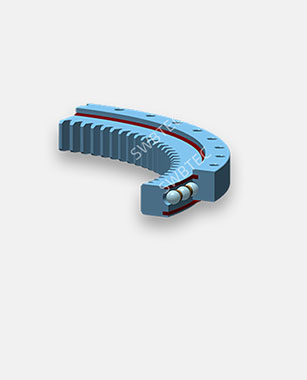
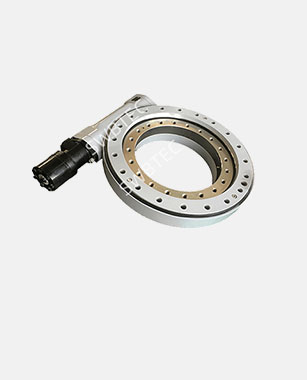
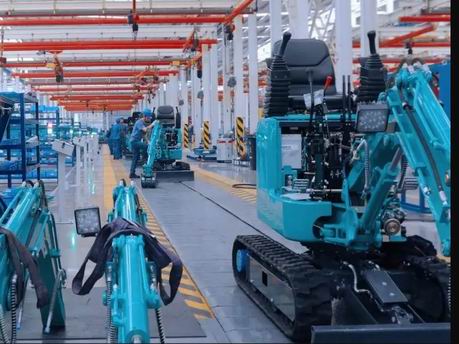
May 15 2023
The Stability Issues of the Turntable Bearing
Read More >

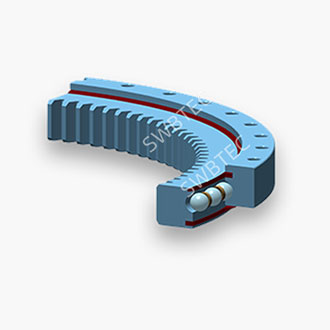
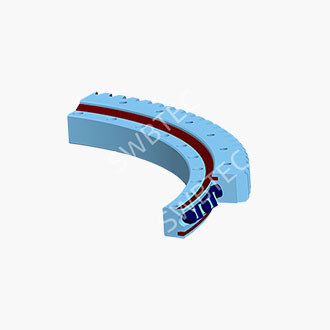
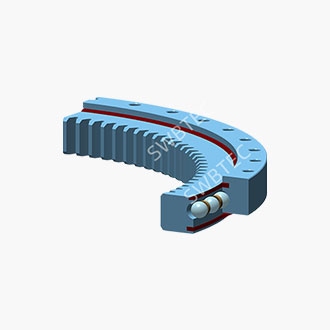
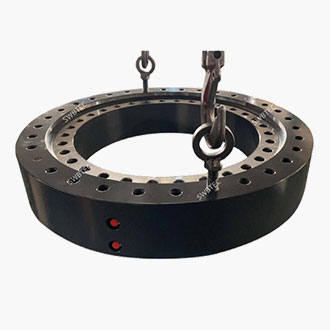
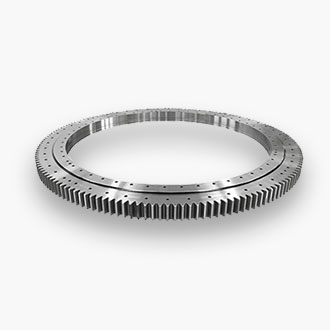
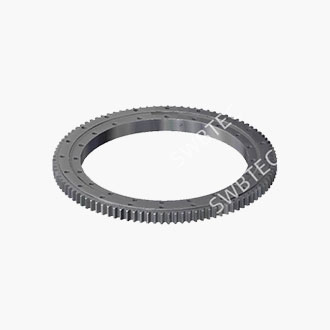
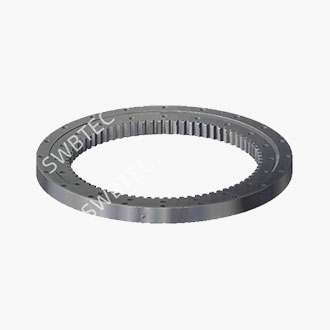
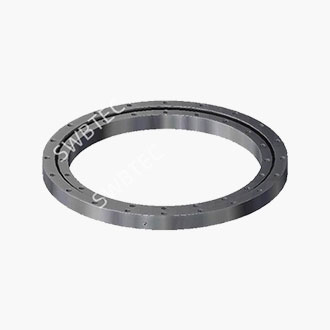
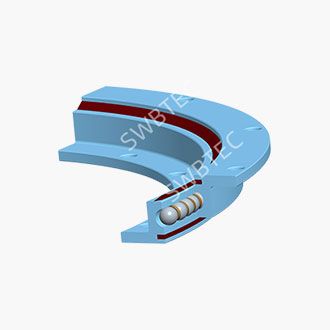
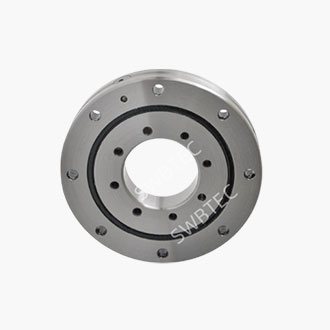
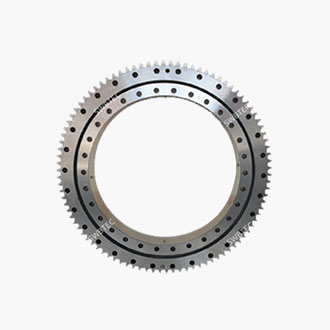
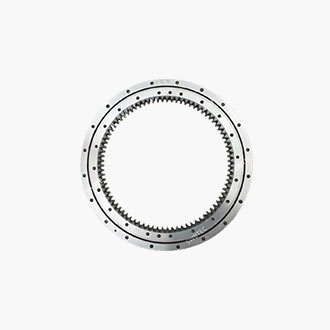
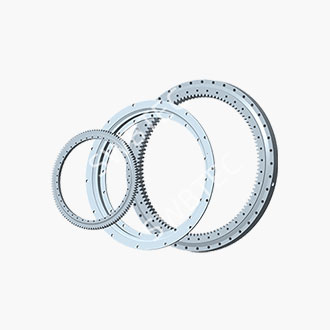
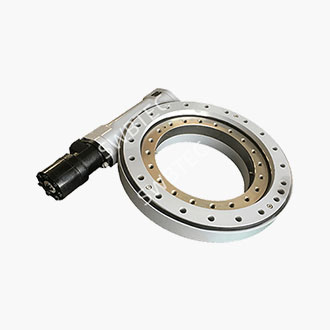
Let's discuss material selection if you buy slewing bearings from China: 50Mn or 42CrMo?
Overseas customers purchasing slewing ring bearings from China for the first time often ask how to choose between 50Mn and 42CrMo. Here is a brief technical overview for your reference.
First, the conclusion: the choice of material depends on the load spectrum, operating conditions and design life; there is no absolute 'good' or 'bad', only whether it is suitable or not.
50Mn = USA 1050/1053 = EURO C50 (1.0540):
This is a medium-carbon manganese steel with moderate hardenability; the effective hardened layer depth is typically around 3.5 mm, with a surface hardness of HRC 55–62.
Advantages: Low cost; entirely sufficient for small to medium loads and medium to low-speed operating conditions.
Typical applications: Tower cranes, small to medium-sized excavators, truck-mounted cranes, and small cranes.
Note: If the equipment is subject to high impact loads or prolonged continuous operation, the fatigue limit and core toughness of 50Mn may prove insufficient.
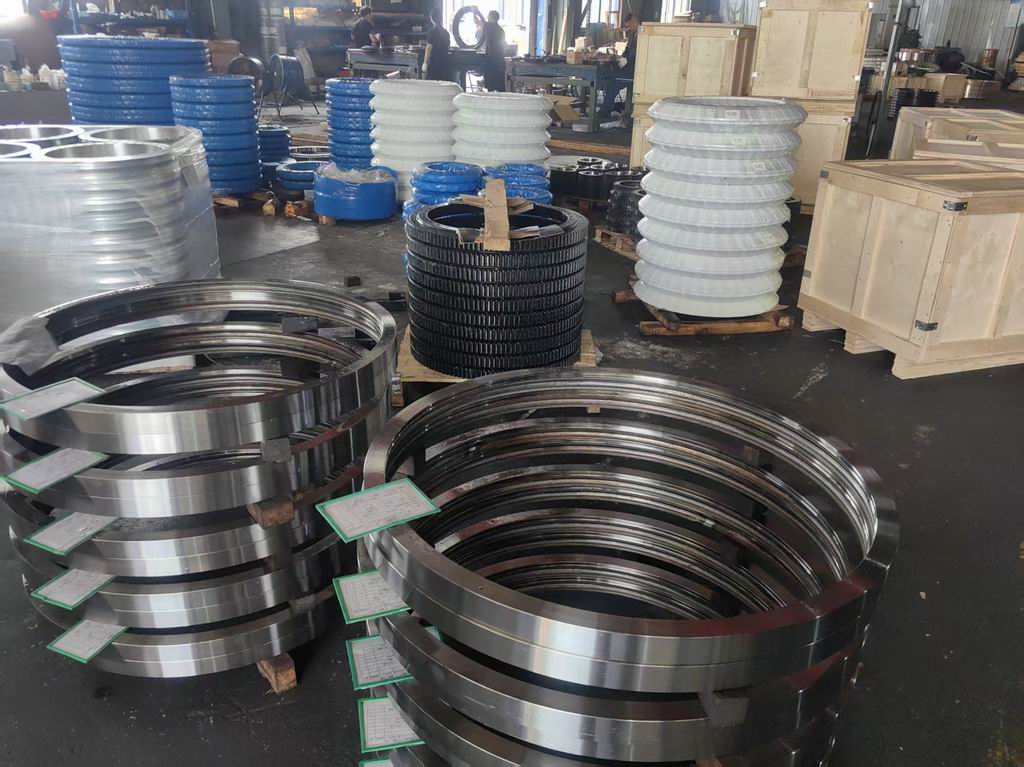
42CrMo = USA 4140 (G41400) = EURO 42CrMo4 (1.7225):
A chromium-molybdenum alloy steel with significantly better hardenability than 50Mn. At the same hardness level, it exhibits a smoother transition zone and greater resistance to spalling; both its impact toughness and fatigue strength are notably higher than those of 50Mn, making it suitable for heavy-load, off-centre load and high-frequency rotation applications.
Typical applications: large excavators, large cranes, port gantry cranes, and offshore platform cranes.
The drawback is that it is slightly more expensive; however, if you factor in reliability over the full life cycle, this investment is well worth it.
One technical requirement that must be emphasised: regardless of which material is selected for your slew rings, it must be supplied in the quenched and tempered (Q+T) condition!
Practical advice:
If you can provide detailed operating parameters (axial and radial loads, overturning moment, rotational speed, ambient temperature, design life, etc.), we will provide you with the optimal recommendation directly. For operating conditions where there is uncertainty, our principle is to err on the side of caution and select 42CrMo to avoid potential risks, as the cost of replacing a failed slewing bearing within equipment far exceeds the slight price difference between materials.
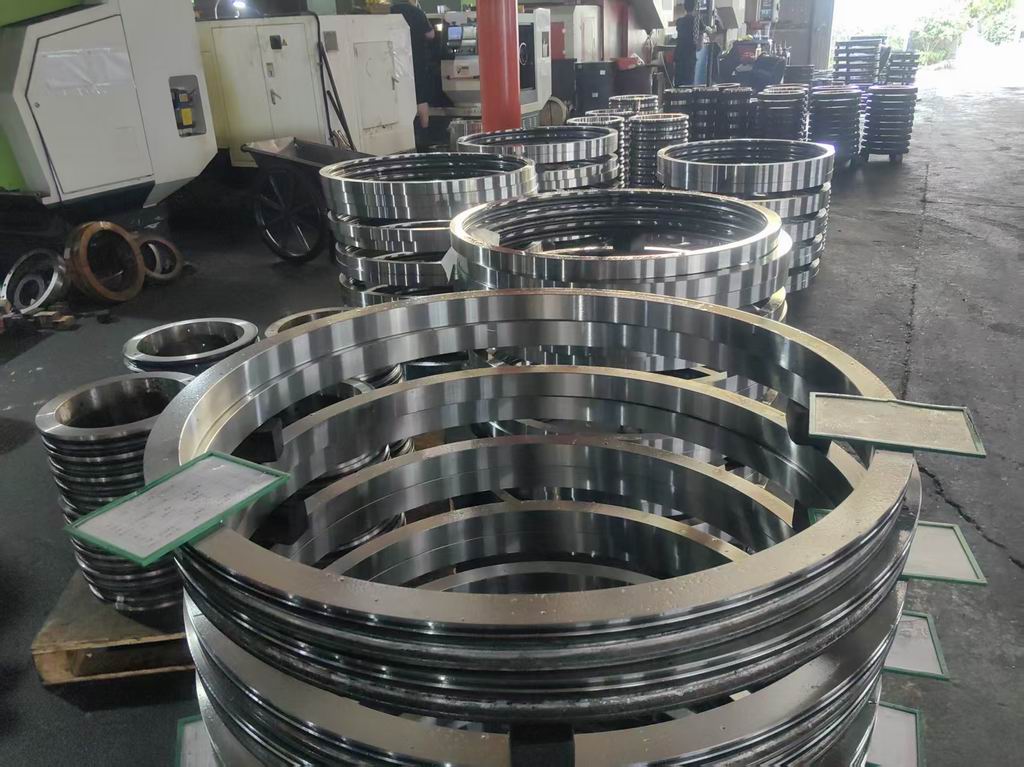
As a professional slewing ring bearings manufacturer in China, this is precisely what we do at SWBTEC: selecting the right materials, ensuring proper quenching and tempering, and precisely controlling the hardened layer. We welcome feedback and discussion from industry peers and technical colleagues.
Frequently Asked Questions (FAQ)
Q1: Which is better, 50Mn or 42CrMo?
A: There is no such thing as 'better'; only 'more suitable'. If the equipment operates under light loads for two hours a day, 50Mn is more than adequate; if, however, it runs continuously throughout the year whilst subjected to alternating loads, then 42CrMo is the minimum requirement. Our standard practice is as follows: we ask the client to provide the load specifications, and we carry out a strength verification. If the safety factor of 50Mn is insufficient, we insist on 42CrMo—reliability must not be sacrificed for the sake of saving money.
Q2: Why is quenching and tempering essential? What happens if it is not carried out?
A: Quenching and tempering form the 'foundation' for ensuring slew bearings service life. Material that has not undergone this process has a coarse microstructure and compositional segregation; following induction hardening, the depth of the hardened layer is inconsistent, making it prone to quenching cracks. Furthermore, the core strength is low, and the raceways will dent and deform under heavy loads. The most typical issues are premature spalling and plastic indentations, which often lead to problems within a matter of months. In contrast, tempered slewing bearings, when properly maintained, can operate without issue for several years—the difference is that significant.
Q3: Is the European grade corresponding to 50Mn actually C45 or C50?
A: The standard equivalent is C50 (1.0540). This is because the carbon content range for 50Mn is 0.48%–0.56%, which largely corresponds to that of C50 (0.47%–0.55%), whilst C45 has a carbon content of only 0.42%–0.50%, which is on the low side. The reason some people refer to it as C45 may be due to early unofficial comparisons or clerical errors. It is recommended that 'C50' be explicitly stated in drawings and technical agreements, with the measured chemical composition provided in the material certificate by the supplier serving as the final authority.
Q4: How can I verify that the supplier has actually carried out quenching and tempering, rather than merely making a verbal commitment?
A: Three key criteria:
① Request a complete mechanical properties report (tensile strength, yield strength, elongation after fracture, room-temperature impact energy), with clearly defined ranges for the quenched and tempered condition;
② Request photographs of the microstructure (tempered sorbite at 500× magnification; there should be no free ferrite or pearlite);
③ Arrange for third-party re-inspection – send the first article or test specimen to an independent laboratory for testing; this is money well spent.
Q5: My equipment is not subject to heavy loads; is using 42CrMo a waste?
A: Not necessarily. If the equipment is intended for export to Europe or the Americas, where safety standards are stringent, or if the design life exceeds 10 years, 42CrMo provides a higher safety margin. Furthermore, should the equipment be subjected to unforeseen impacts (such as a crane suddenly lifting an overload), the impact resistance of 42CrMo can prove crucial in such emergencies. In short: if your budget allows, go for 42CrMo for peace of mind; if your budget is tight, choose 50Mn but ensure the quenching and tempering process is carried out thoroughly.
If you have more question, please feel free to contact SWBTEC slewing ring bearings factory