English
  日本語
日本語  français
  Deutsch
  Español
  italiano
  русский
  português
  العربية
  Türkçe
  Polska
  Nederland
Jan 06 2024
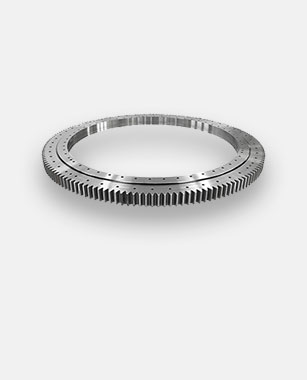
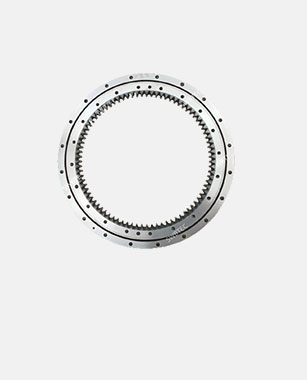
Double Row Slewing Bearing: Enhancing Efficiency and Safety in Engineering and Construction Industries
Read More >

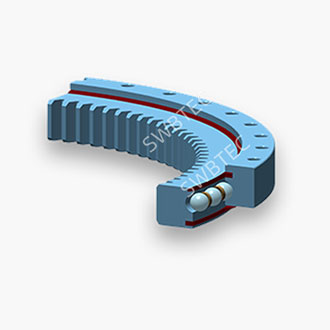
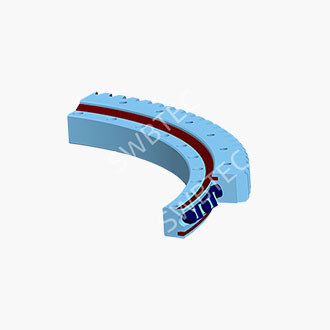
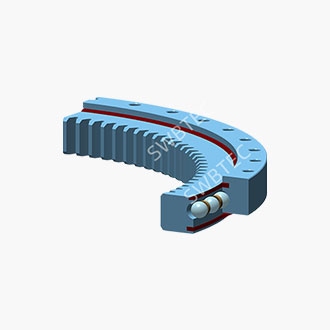
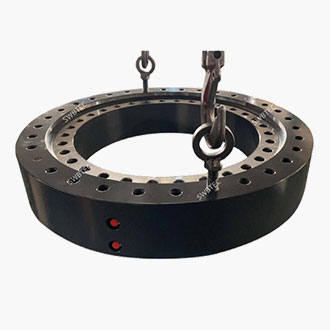
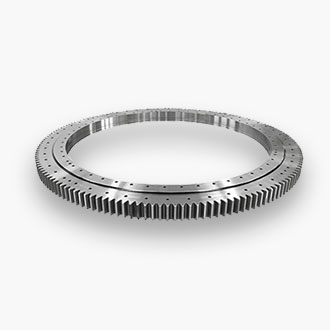
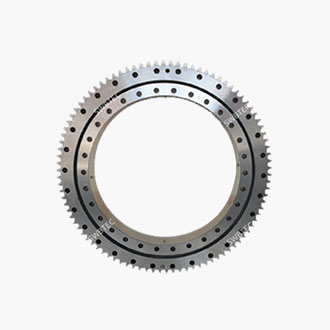
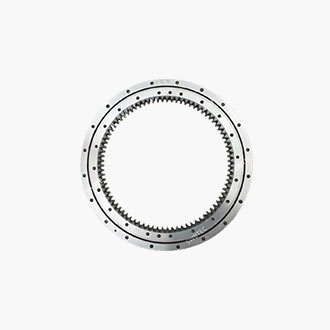
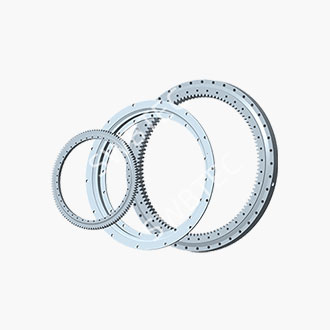
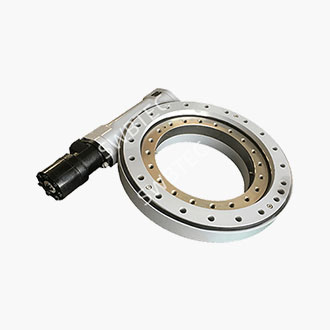
Forging the 'Steel Core' of Slewing Bearings Through the Power of Technology
I am a technician at SWBTEC. To outsiders, a slewing bearing may appear to be a bulky steel ring, but to me, the raceway is the heart of this steel colossus. The quality of the raceway surface hardening—whether the hardened layer meets specifications, whether the hardness gradient is smooth, and whether the microstructure is stable—directly determines the service life and safety of this slewing bearing in excavators and cranes. Today, from the perspective of front-line technical control, I would like to share how we ensure consistent quenching quality and effectively prevent defects such as soft bands and cracks.
I. Quantitative Control: Ensuring Quenched Depth is 'Precise to the Millimetre'
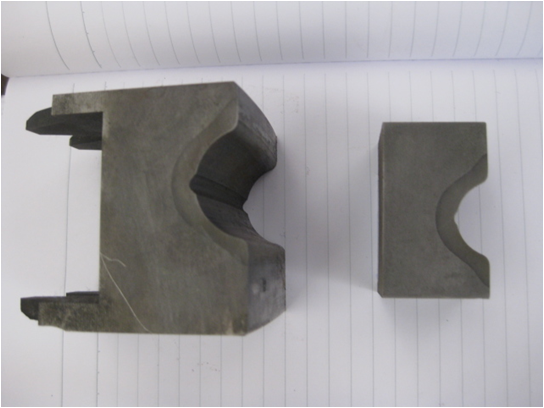
A deeper hardened layer is not necessarily better; excessive depth leads to brittleness, whilst insufficient depth results in wear. Our focus lies in precisely controlling the ‘thermal penetration’ depth of medium-frequency induction heating. By limiting the coupling gap between the inductor and the raceway surface, and by setting precise scanning speeds and power outputs, we ensure that the current penetration depth remains stable within the required process parameters. During routine first-piece inspections, we dissect and etch test specimens using wire-cut EDM, then measure hardness at each point with a durometer to determine the effective hardened layer depth using the boundary hardness method. Only when depth variations are controlled within an extremely narrow tolerance range is batch production permitted. This rigorous pursuit of precision ensures that every set of slewing bearings possesses sufficient load-bearing thickness under heavy loads.
II. Gradient Optimisation: Achieving a 'Soft Landing' in Hardness
The raceway surface of slewing rings requires not only high hardness to resist wear but also a gentle hardness gradient to prevent spalling. We constantly remind ourselves that quenching is not about creating a “glass shell”, but about forging “armour”. In process design, we fine-tune the transition zone by adjusting the spray pressure and cooling time of the quenching medium, whilst utilising the preheating function of induction heating. Consequently, the hardness decay curve becomes smooth from the high-hardness martensitic zone at the surface to the low-hardness pearlitic zone at the core, thereby avoiding the stress concentrations caused by a sharp drop in hardness. By using a Vickers hardness tester to probe layer by layer from the surface, we plot a smooth and gentle gradient curve—the best proof of achieving a ‘soft landing’.
III. Microstructure as the Foundation: Ensuring Rock-Solid Stability
Behind hardness lies microstructure. To ensure microstructural stability, we place the utmost importance on matching the cooling rate of the quenching bath with the steel’s hardenability. A stable, fine-needle-like, cryptocrystalline martensite is the ideal microstructure we pursue, as it offers both high hardness and good toughness. Should the cooling rate be insufficient, leading to the formation of martensite or bainite soft spots, wear resistance will be significantly reduced. We strictly monitor the concentration and temperature of the quenching bath on-site, conducting daily tests on its cooling characteristics. A qualified microstructure is uniform and dense, free from coarse martensite, with the content of retained austenite strictly controlled. A stable microstructure is the very foundation for withstanding the impact of alternating stresses.
IV. Precise Prevention: Keeping Soft Zones and Cracks at Bay
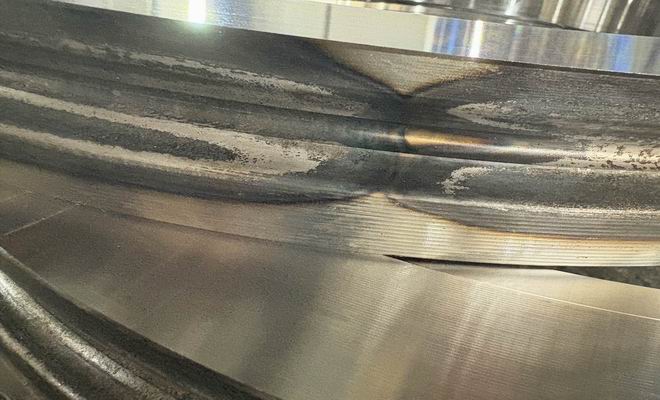
Soft bands and cracks are the arch-enemies of the quenching process. To address the unavoidable overlap at the end of the quenching cycle during continuous scanning of ring-shaped raceways, we employ ‘gradual power reduction’ technology: as the process approaches the 360° overlap zone, the CNC system automatically and linearly reduces power to minimise the width of the heat-affected zone, whilst supplemented by a powerful post-spray to prevent tempering and softening of the already quenched areas. As for cracks, the focus is on stress relief. We strictly adhere to the principle of “no overnight quenching; immediate stress relief”; unless a specific self-tempering process is required, workpieces must be placed in the tempering furnace within one hour of quenching. At the same time, we rigorously inspect the chamfers on the raceways of slewing ring to eliminate micro-cracks induced by stress concentration at sharp corners.
As SWBTEC technicians, the temperature gauges, hardness testers and microscopes in our hands are the steel weapons we wield to safeguard quality. Achieving precise hardness, maintaining consistent depth and ensuring a pure microstructure are our commitments to every raceway and every set of slewing bearings. We believe that only by striving for perfection in these minute details can the SWBTEC brand remain as steady as a rock even under extreme operating conditions.
More information, please visit SWBTEC slewing bearing
By Mr.Zh